
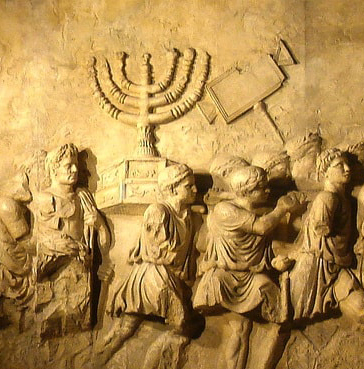
September 7th is quite an auspicious date in history. For on that date in A.D. 70, the city of Jerusalem was fully occupied by the Roman Army after a siege of four months. Observant Jews still mourn this siege every August 10th (Tisha B’Av) when their Great Temple was destroyed and pillaged. You can still see the menorah from the Temple being paraded in triumph on the Arch of Emperor Titus in Rome. It is believed that there was enough treasure looted from the Temple and Jerusalem to finance the building of the Colosseum. Gone is the Temple, but the Colosseum and the Arch remain. Another thing that survived Tisha B’Av was Christianity.
Before its destruction, Jerusalem—where Jesus preached and was crucified—had been the “global” headquarters of the new Jewish sect of “Christians,” Contrary to traditional history, the successor to Jesus in that city was James the Just, not Peter. Peter was proselytizing elsewhere and was eventually executed in Italy. James was either Jesus’s brother, cousin, or his stepbrother from St. Joseph’s first marriage, depending on your brand of Christianity. It was James who monitored the overseas missionary work of Peter and Paul until he was murdered by Jewish high priests a few years before the Jewish revolt in A.D. 66. Even after the murder of James, which sent them into hiding, the “Christians” of Jerusalem still considered that city their sacred homeland.
Two years after James was killed, Peter—now Church leader—and Paul were executed in Italy, blamed for the Great Fire of Rome (A.D. 64) by Emperor Nero. Nero was still emperor when the Jews revolted in A.D. 66. Things looked bad for both Jews and Christians under his reign. Then something of a miracle happened. Nero committed suicide in A.D. 68 during the Jewish revolt; resulting in various generals around the Empire vying for his job.
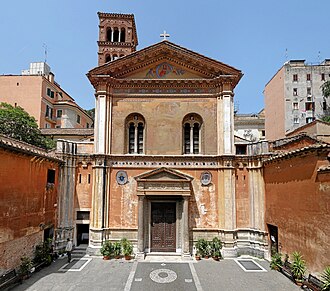
first home in Rome
It was during this chaotic period, when Jerusalem was under siege, that Roman generals Titus and his father Vespasian captured a Jewish leader name Josephus. Josephus must have been a very persuasive talker because he convinced Vespasian that he would be the next Emperor. Since Judea was the source of messiahs—Jewish rulers—Josephus reasoned, and Vespasian had just eliminated all the Jewish competition, the Roman now fit the prophecy. Sure enough, as his Roman competitors fell by the wayside, Vespasian was hailed emperor by his legions in Judea and later confirmed Emperor by the Roman Senate, ending the chaotic period.
Emperor Vespasian rewarded young Josephus with Roman citizenship and adopted him with the family name: Flavius Josephus. This newly minted Judeo-Roman went on to write numerous books on Jewish history, containing the first non-Christian mention we have of Jesus and Pontius Pilate. His influence on Vespasian and Titus prompted them to reverse Nero’s anti-Christian policy—no longer were Christians hunted and persecuted. With Jerusalem in ruins and Rome a more tolerant city, Christian leaders found a new hub for their growing religion.
It is during this period that the first Gospel by Mark is presumably written. The home of Roman Senator Quintus Cornelius Pudens (Domus Pudentiana) is believed to be the first official residence of the Bishop of Rome. Peter may have stayed here during Nero’s reign, but his successor “Pope” Linus (A.D. 67 – 76) had a much safer stay under the Flavian emperors.
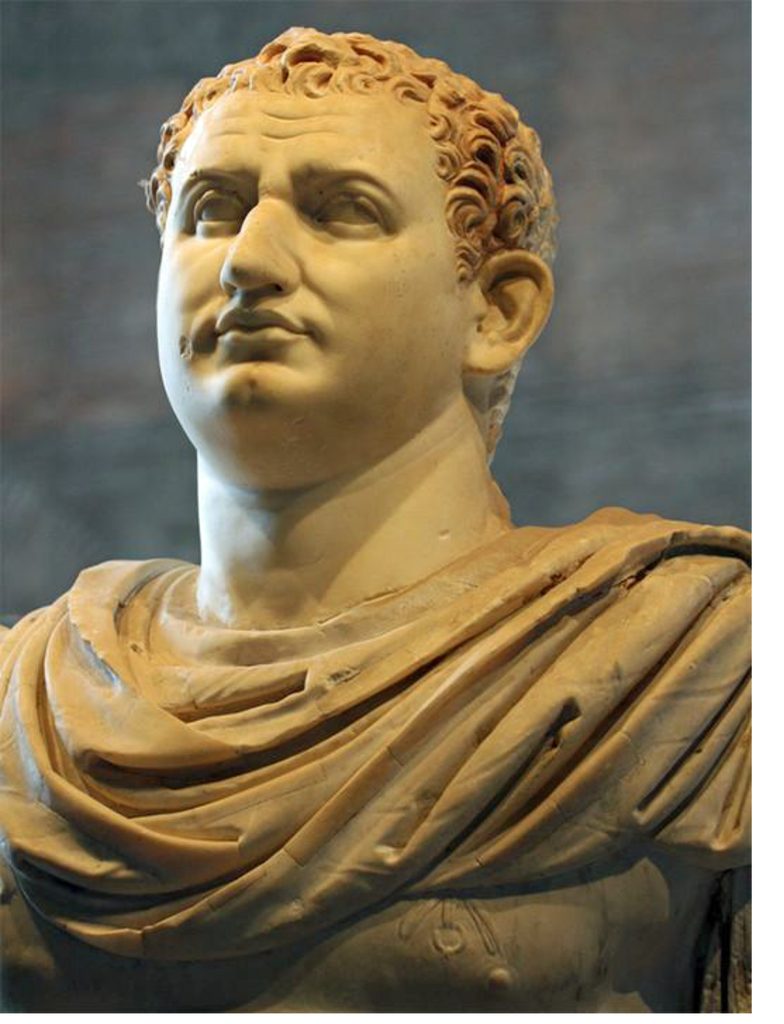
Emperor Vespasian reigned until A.D. 79, but his first order of business was to level Nero’s grand palace and replace it with the Flavian Amphitheater. Because it was being built where a colossal statue of Nero had been erected, the amphitheater took on the nickname “Colosseum.” Vespasian was succeeded by his son Titus who built his victory Arch nearby. Vesuvius buried Pompeii the year Titus took office.
Emperor Titus, no doubt, saw enough misery and death during his time in Judea that he transformed himself into a benevolent and forgiving emperor. “the love and delight of mankind” as one Roman historian called him.
The nascent Christianity found its new home during his short reign. –JLM
 John Mancini

Jews also mourn on Tisha B’Av, the first destruction of the Temple centuries earlier under the Babylonians. Interesting that Mozart composed an opera La Clemenza di Tito, which describes how he exercised “clemency” in the personal intrigues of his life in the year 79.
Fascinating. Also worth mentioning is how Christianity spread soon afterward also thanks to the Italians, this time via their artistic skills: sculpture, painting, architecture (churches), etc.
This continued during the Middle Ages and IL Rinasacimento via sacred music, though the early church members began that liturgical practice back in the day. A quick example:
https://www.youtube.com/shorts/l4zCU-PCC3w