
The Daily Herald, a newspaper that covers much of the northwest suburbs of Chicagoland, recently published an Op-Ed of mine written for Italian Heritage Month. Rather than discuss the usual battles over Columbus, I wanted to expand peoples’ knowledge of less well-known, yet still important, Italian American historical figures, particularly in Chicago’s early history.
Chicago is what I know well, of course. 1) I live and work here (though am now happily retired and happily write blogs for the Italic Institute of America); and 2) As a former president of the Institute (2006-2016), I initiated, researched, and co-produced a 2007 documentary for local PBS (Channel 11) titled, And They Came to Chicago: The Italian American Legacy. Actor Joe Mantegna, one of Chicago’s very own, did the voice-over narration. The film was broadcast on both Channel 11 and NBC Channel 5, a rare public broadcasting/corporate broadcasting double. Even more rare: Al Capone was only mentioned once.
The film was one of my proudest achievements, made possible by the support of the Italic Institute. But it was by no means easy. Raising money for the film was a chore, to say the least: Italian American organizations spend monies on parties, not educational projects meant to shine a light on our community’s achievements for posterity. And after filming was finally completed, we experienced a taste of what Hollywood would term “the artistic temperament”: the filmmaker whom we hired (who shall remain nameless) unethically removed the Institute’s name from the opening credits and mine from the website.
That’s in-gratitude for you!
The original film merely mentioned the two people whom I wrote about in my Op-Ed, which was why I wanted to go more in-depth. Research over the years has revealed that these two Chicago Italians deserved far more screen time than given.
Here is my op-ed which appeared on October 19th. Let the trumpets sound:
Oh, say can you “C” the real Chicago Italians?
As an English teacher, it always stuck me that, during Italian American Heritage Month in October, there are only two Italians largely associated with Chicago, both with letter “C” surnames and with tainted reputations: Al Capone, aka “America’s gangster,” and Christopher Columbus, transmogrified from explorer to exploiter.
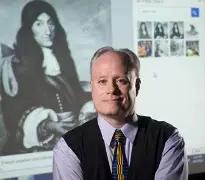
Thankfully, another Italian with a “C” name has been getting more recognition lately: Mother Francis Xavier Cabrini, the Catholic missionary whose sainthood ceremony in 1946 drew a crowd of 100,000 people to Soldier Field. Though buried in New York, Cabrini died in Chicago in 1917, twelve years after building Columbus Hospital in Lincoln Park. The hospital is gone but the National Shrine of Mother Cabrini stands on its spot, a dignified homage to her positive legacy.
Of course, the letter “C” also stands for Chicago. In researching the Italian American community, I discovered two more positive Italians with “C” names. Unlike Capone, Columbus and Cabrini, both are more Chicago-adjacent and should be much more well-known: John B. Cuneo and Vivian (Della) Chiesa. But first, a quick review of Chicago history.
Around 1780, Jean Baptiste Point du Sable, son of a French father and Haitian mother, became the first non-native settler in what was to eventually become Chicago. However, a century earlier (1680-1681), another explorer, Henri de Tonty, sailed through the same area with Robert La Salle. Irony of ironies: Unlike Du Sable and La Salle, Tonty wasn’t French; he was an Italian from Gaeta between Rome and Naples) whose name had been “Frenchified.”
Tonti (the correct spelling) continued down the Mississippi River and founded settlements in Peoria and Starved Rock, Illinois. Plaques on the Michigan Avenue Bridge in Chicago and in Starved Rock honor him. Even Arkansas claims him!
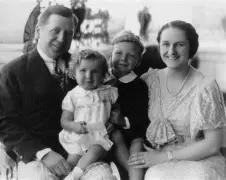
I bring up this digression to stress that, even after its founding in 1837, Chicago was still considered unexplored territory. That’s why, in 1847, two brave Italian brothers, Giovanni and Riccardo Cuneo, left their native Genoa (Columbus’s home turf) and followed Tonti’s route, seeking greater farming opportunities. They landed in a burgeoning American city with a Native American name: “Chicago.”
Riccardo didn’t stay. He went to California and founded a successful store for gold-rush workers needing food and tools. His brother stayed in Chicago, Americanized his name to John B, and also flourished. Within a generation, Cuneo’s success in food produce and real estate made his family a member of Chicago’s wealthy Gold Coast, setting entrepreneurial standards for generations.
In 1881, John B. Cuneo financed Assumption Church, the first all-Italian parish in the city. It is still located in River North between the Merchandise Mart and Gene & Georgetti’s Steakhouse. John’s son, Frank, expanded his father’s wealth via more real estate investments.
Frank’s son, John F. Cuneo Sr., founded the famous publishing company Cuneo Press in 1907 and the Frank Cuneo Memorial Hospital in 1957. And John’s son, John F. Cuneo Jr, in addition to overseeing another Cuneo property — the Golf Mill Shopping Center in Niles — opened his family’s Libertyville mansion to the public in 1991. Six years later, the Julia Roberts film My Best Friend’s Wedding was filmed on its elegant, Italianate grounds.
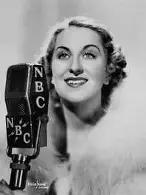
As for Ms. Della Chiesa? Born into an opera-loving household on Oct. 9, 1915, Della Chiesa won a singing contest on WBBM Chicago radio in 1935 — and yes, an opera star was born. From the mid-1930s through the mid-1960s, Della Chiesa was a household name. She headlined with maestro Arturo Toscanini of the NBC Orchestra; performed on Milton Berle’s TV variety show; and sang the National Anthem at the final game of the 1959 World Series at Comiskey Park.
Even more tantalizing: In a 1988 interview with writer Charles Mintzer, Chiesa noted that she once had a short-lived talk-show on local ABC-TV Channel 7. One of her young interns was future Chicago talk-show legend Phil Donahue. ABC-TV was also where Oprah Winfrey began her decades-long dominance after Donahue.
But did Della Chiesa set the original template? The mystery remains.
So when you clink your wine glasses for John B. Cuneo and Vivian Della Chiesa, be sure to use another worthy “c” word — the joyful Italian cheer, Cent’anni! (100 years!) –BDC
 John Mancini
Bill, i always like your writings. this is good history. next time you are in California we can put together a program at the Italian Center in Sacramento.
Bill Cerruti, email: Italy1@surewest.net – tel: 916-396-3939