
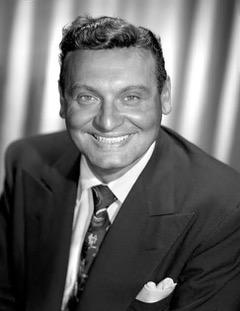
Francesco Lo Vecchio was the most successful singer to come out of Chicago. He sold millions of records, appeared in movies, had his own TV show and was a major part of the ’40s to ’69s era when Italian-Americans dominated pop music charts.
Lo Vecchio, better known by his show business name—Frankie Laine—was born in the Windy City’s Near West Side in 1913 to immigrants from Sicily. His career lasted seven decades, until his death at age 93.
He also was one of my childhood quasi-cowboy heroes.
Laine’s music was multi-faceted. His hits included the jazz standard That’s My Desire, the country-western Mule Train and the religious I Believe. He sang the themes for many Westerns including the movies Gunfight at the OK Corral, 3:10 to Yuma and the TV show Rawhide. Like Dean Martin, Connie Francis and Perry Como he also recorded several songs in Italian.
Mule Train, however, was my first connection with Laine. When I was 11-years-old and Mule Train was a top hit, I learned to sing it in Laine’s style. That included taking off my belt and using it to emulate the song’s whip-cracking sounds (and get a few laughs).
This skill earned me a World Series “ticket” in my fifth-grade Catholic school class. As a reward to students who did good deeds (which included singing Mule Train for the class) or had high grades, Sister Mary Mark allowed such students to listen to broadcasts of the 1950 World Series. (The Yankees swept the Phillies four straight in that one.)
Thirty or so years later, as a reporter for The Sacramento Bee, I was assigned to do a story about a “famous singer” who was coming to town to record a jingle for a new brand of potato chips.
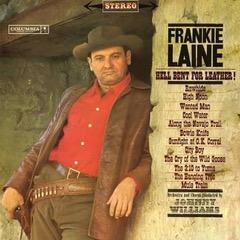
“They’re going to be called Buffalo Chips and promoted with a cowboy theme,” an advertising agent told me. “We want to sell them in cities as well as rural areas, so we needed a singer who is Western but not too Western and Frankie Laine fit the bill perfectly.”
I was introduced to Laine. When he heard my name he said, “Oh, a paesano,” and laughed. His speaking voice was gentle and friendly, markedly different from his macho singing voice. I wanted to tell him of my Mule Train efforts but was too embarrassed to mention them. Instead, we talked about our common ethnic roots.
He said he was proud of his heritage. He claimed he spoke Italian “pretty good” and told me about his birth surname. “Lo Vecchio means ‘the old man’ and it bothered me when I was young but now it fits me.” He laughed again. Laine was in his mid-50s then.
He explained that a radio station executive told him to change his name when he was starting out because Lo Vecchio “is too hard for Americans to pronounce.” He picked Laine as a tribute to his alma mater, Lane Technical High School, adding the “i” to avoid confusion with Frances Lane, another popular singer at the time.
We talked more about his career, his life, his many hits, his 43-year marriage to actress Nan Gray, and his faith. “One of my biggest hits was ‘I Believe,’” he said proudly. “When I sing it, I think people know I really mean it.”
I met up with Laine two more times as a reporter, both in connection with concerts in which he was performing. They were more than assignments to me. They were encounters with a hero who had stood the tests of time. Frankie Laine passed away in 2007, R.I.P. –BM
 John Mancini
Beautiful tribute to an amazing singer. Thanks to the availability of YouTube, there are literally hundreds of clips of Signor Lo Vecchio to enjoy, everything from live performances over the decades to a personal tour of his San Diego home in 2004. Search and enjoy!