
The media, in all its forms, can slice and dice history as well as current events.
Recently, Long Island’s Newsday, which has a virtual monopoly in a suburban market of 3 million people, profiled a local 99-year-old veteran who “survived two years in an Italian concentration camp.” If you have never heard the term “Italian concentration camp” before, it’s because there were none in the Nazi sense.
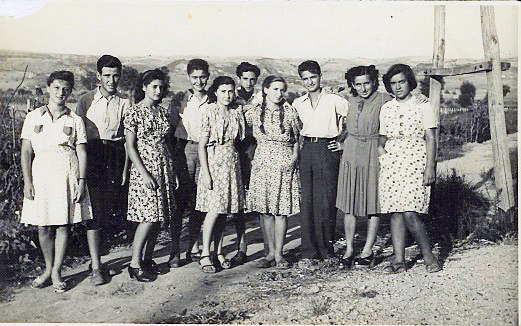
Jewish veteran Harry Arlin-Arnstein was born in Czechoslovakia and later served as a teenage translator with the British Army in Italy. When the war began, Harry and his family fled German-occupied Czechoslovakia to then-neutral Yugoslavia. Soon, even that refuge was engulfed in war. The Italian Army captured the entire coastal area within two weeks while the Germans took the interior region. Like most Jews at the time, Harry’s family probably opted to flee into the Italian occupation zone where they were, as he relates, “captured” and interned in a Fascist “concentration camp” from 1941-1943.
Fascist Italy was a destination for fleeing Jews before the war and even up to 1943, prior to Mussolini’s downfall. Some 9,000 Jews from middle Europe escaped to Italy, which did not require visas for entry at that time. Think about that. Mussolini, Hitler’s ally, took in foreign Jewish refugees without vetting. They were sorted out later as either displaced persons who were remanded to restricted internment camps or given “confino libero” (on their own recognizance) within selected cities and given cash every month for rent and expenses.
Compare this to the treatment of California Italian Americans in 1942. Some 10,000 men, women, and children, were evicted from their homes and livelihoods along the coastal areas for six months under FDR’s Executive Order 9066. Almost 90% refused welfare money and chose to sleep elsewhere in shared spaces, garages, or even chicken coops. Unlike other Americans, our community internalized this as their shame, and received no apologies or reparations.
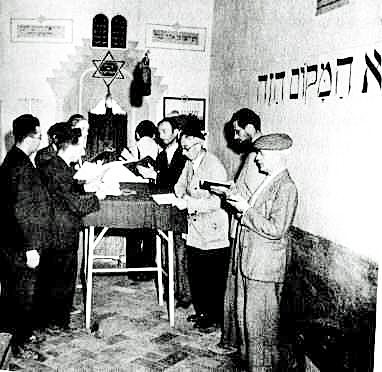
Harry was quoted as saying “I lived under Hitler and I ran. And Mussolini put me in a pen as a prisoner.” That “pen” was at Camp Ferramonti in Calabria and was his teenage perception of internment. About 3,700 foreign Jews lived there protected from the German ally. The Germans demanded them back, but the Italians refused. Internees were allowed mail and visits to sick relatives in other camps. They were housed in dormitories by gender, had classrooms and nurseries for children, a make-shift synagogue, a library, and even a theater. Several couples got married there and 21 children were born. Even after liberation, many internees chose to remain in the relative safety of the camp until its closure in December 1945.
These are not revisionist views. They are well documented in our 56-page Italy and the Holocaust report, as well as books by Elizabeth Bettina (It Happened in Italy) and by Holocaust survivors like Walter Wolff (Bad Times, Good People) and Eric Lamet (A Child al Confino). Even Wikipedia’s “Ferramonti di Tarsia” entry is balanced.
I sent an email to Newsday’s Letters editor to correct this disinformation, and another to the feature writer who reported this story. My letter hasn’t been published. It would, no doubt, diminish Harry Arlin-Arnstein’s version of his Italian sojourn which, no doubt, saved his life. –JLM
 John Mancini
In my 90 years ofl INTIMATE RELATIONSHIPS with jews in every aspect of life, family ties business, cultural, religion and so on, I’m left with the reason for DISDAIN of everything “ITALIAN” by Jews is JEALOUSY of “ITALIAN”