
U.S. Ambassador to Rome, Tilman J. Fertitta, has got nothing on me.
Having sojourned last year to Calabria’s majestic Costa degli Dei—the Coast of the Gods—where the pristinely transparent sea meets the vast cerulean sky, I found myself, one year later, sailing by Procida and anchoring at the island of Ischia in the Bay of Naples.
Of course, by “anchoring,” I mean it in the most metaphorical sense. My personal superyacht is so aggressively stealthy it doesn’t even register on maritime radar—or exist in physical reality. Yet while actual billionaires are stuck miles offshore to avoid scratching their massive vessels, I practice a refined brand of low-cost diplomacy, one centered on spreading good cheer, pressing the flesh, and promoting the Seed of Aeneas.
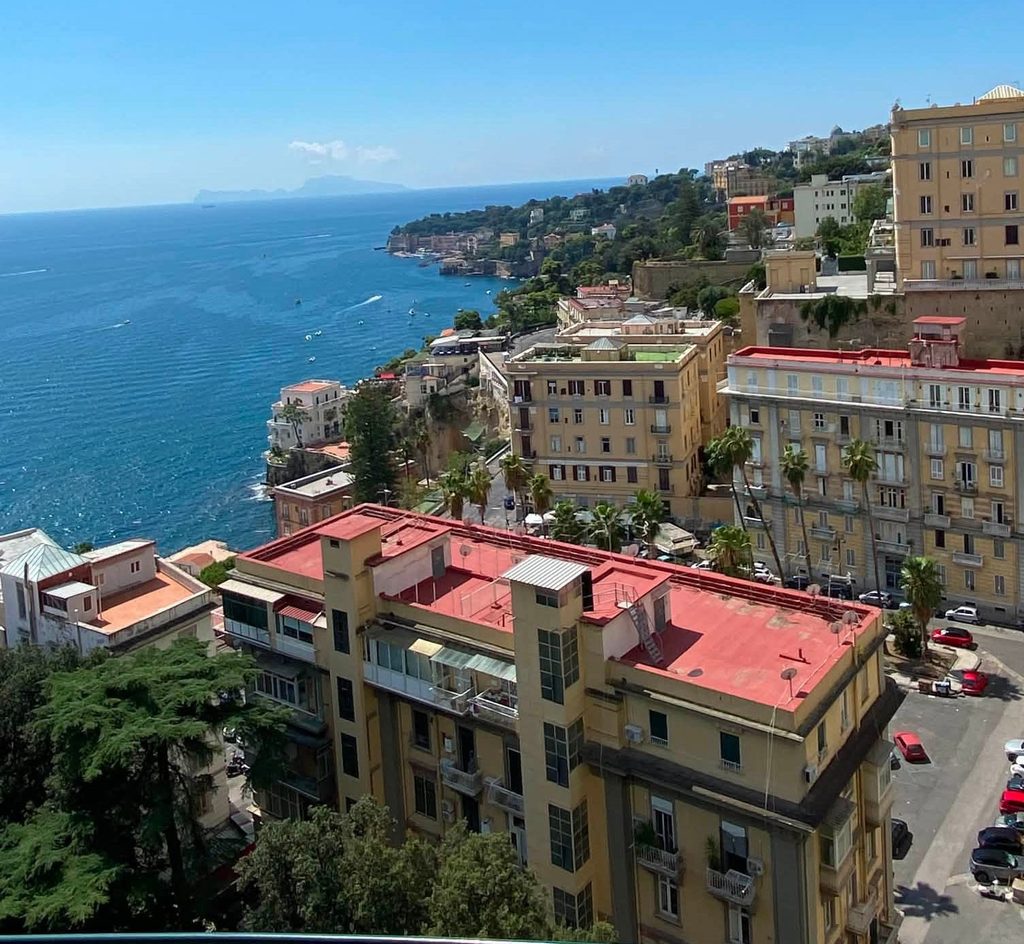
And so it was that my Italian sojourn of August 2026 carried me northward from the mythic shores of Calabria to the volcanic islands and storied waterfront of Naples—a journey that was, in equal measure, geographical, historical, and imaginative. Indeed, my mantra became: To relax, perchance to dream.
While taking in the sun and sea at Maronti Beach, Ischia, my thoughts wandered to another time and place: Cicero’s haven in ancient Vibo Valentia, along Calabria’s Coast of the Gods in the Tyrrhenian Sea. In my mind’s eye, I marveled at the sheer majesty of that villa maritima—its multi-level terraced peristyles, grand colonnades, open courtyards, and private library ideal for intellectual study (otium).There, amid the same Tyrrhenian waters that had so captivated me the previous year, the boundaries between antiquity and the present seemed to dissolve. The Mediterranean has a way of doing that. Its waters are not merely blue; they are repositories of memory. Its shores do not simply receive travelers; they receive the accumulated weight of civilizations.
The past is always prologue where the heart and mind travel in unison. And perhaps nowhere is that sentiment more appropriate than Naples—the Magic Boot’s third-largest metropolis—which came next on my itinerary. Of all the encomiums to Naples, two stand out as the most fascinating: “Vedi Napoli e poi muori.” (See Naples and then die.) –Johann Wolfgang von Goethe. And, in a rather more florid vein:“Naples sitteth by the sea, keystone of an arch of azure.”–Martin Farquhar Tupper.
Goethe, of course, was hardly alone in being overwhelmed by Naples. To see the city is to encounter a place where beauty and history refuse to remain in separate compartments. The Bay of Naples, framed by islands, mountains, sea, and sky, provides the stage; the centuries provide the drama. My jaunt to Naples was therefore less a conventional vacation than a stroll through the city’s monuments honoring a pantheon of Italian heroes.
I stood in awe gazing upon the statue of Caesar Augustus, which is situated in a beautifully maintained public garden on Via Cesario Console, next to Piazza del Plebiscito. This majestic monument, which is a bronze replica of the Augustus of Prima Porta (the original marble version is kept in the Vatican Museums), was gifted to the city in 1936. Rome’s first emperor, who promulgated an unprecedented and unparalleled 200-year period of global stability and prosperity known as the Pax Romana (27 BC to AD 180), is a personal hero with ancestral ties to my beloved Calabria. Mounted on a stone pedestal, the Augustus monument offers a breathtakingly panoramic view of the Bay of Naples, with Mount Vesuvius in the background. What’s more, it honors the deep historical ties between Rome and Neapolis.
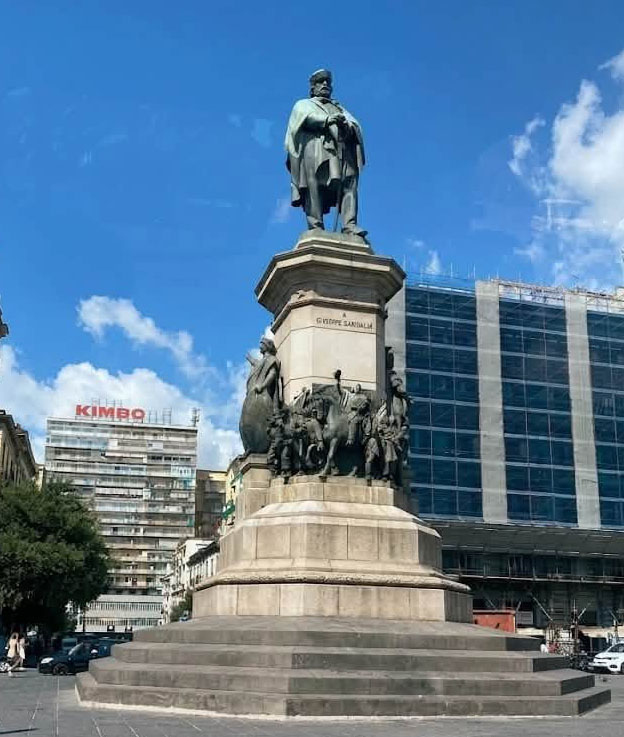
The next edifice I beheld was a sculpture of the hero of two worlds—Giuseppe Garibaldi. Looming high above a large public square—the eponymous Piazza Garibaldi—in the eastern sector of Naples, this statue honors the military genius and quintessential man of action who completed the reunification of Italy in 1861, restoring the unity forged by Rome in 222 B.C. and overthrowing the yoke of foreign occupation.
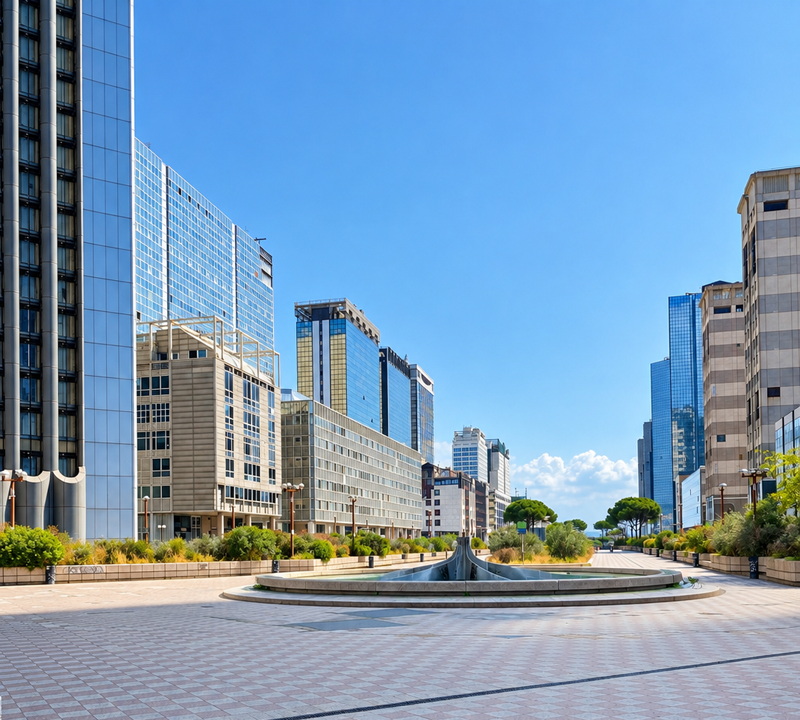
Finally, I came upon the statue of Armando Diaz, the Neapolitan general whose decisive victory against the Austro-Hungarian army at the Battle of Vittorio Veneto effectively ended World War I on the Italian Front and triggered the collapse of the Austro-Hungarian Empire. This impressive monument is set on a high pedestal located on the embankment of Via Francesco Caracciolo.
The Italian landscape, particularly in the south, seems incapable of allowing the traveler to remain merely a spectator. One moment you are contemplating the sea; the next you are contemplating empire. One moment you are basking on a beach; the next you are mentally strolling through the peristyles of a Roman villa. One moment you are admiring Garibaldi’s legacy; the next you are raising an imaginary glass to the generals and statesmen who helped shape the peninsula.
Finally, a trek through Neapolis would not be complete without that wondrous elixir of the Gods—il caffè—which I imbibed at the legendary Caffè Gambrinus whilst luxuriating in the visceral enchantment of this irresistible city by the sea. –RAI
 John Mancini

Recent Comments