
An old refrain in our community is that southern Italians were either farmers or fishermen. Indeed, we are very much a people who were tied to the soil or the sea. Even today, some of us may enjoy producing tomatoes in a home garden or spending a day to land a Striped Bass. I believe it’s because at heart we are a productive people, programmed by millennia to produce and to provide. We are a hands-on people.
Our forebears came to America to work. They knew that America was a rough and tumble place. Many just wanted to make enough money here to live well in Italy. They took the dirtiest jobs: digging tunnels, mining coal, commercial fishing, factory labor, collecting garbage, laying bricks, and working the farms. After the Civil War, American planters imported Sicilians to pick the cotton and cut sugar cane that Black slaves had done previously. But the planters and industrialists didn’t count on these “docile” immigrants to rise above their menial labors to become landowners themselves.
Not everyone returned to the homeland. It was the Roman poet Lucius Annaeus Seneca who wrote “Ubiicunque Romanus vicit, habitat.” (“Where the Roman conquers, there he lives”), meaning that the Italic people transformed every land they conquered into a new home. And America was soon to experience that transformation by our “farmers & fishermen.”

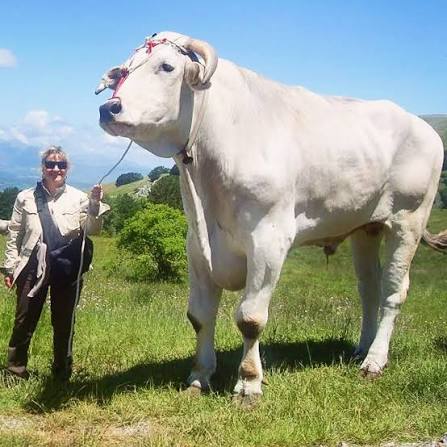
Even before Italians arrived here in massive numbers, their developments in agriculture were adopted in Western Europe and the Americas. The principles of soil conservation, crop rotation and animal breeding came out of Roman Italy. Cattle ranching was a great money-maker dating back to the Etruscans, famous for their pure white Chianina breed, the largest and oldest cattle type in the world. In fact, the early Latin word for wealth was pecunia, from pecus/cattle.
Over the centuries, more common Italian livestock spread across the globe. The Leghorn Chicken, named for city of Livorno, became a favorite for egg production. One hen lays about 300 white eggs per year—chances are your last omelet was born of a Leghorn. Italian bees are an all-time favorite for honey production. They are noted for a gentle temperament. They make the gold standard of honey. These Italo insects are great foragers of nectar and keep clean hives. Italians like their bees hardworking and neat!
Breeding not only meant pairing animal DNA but that of fruit and vegetables too. Italian scientist Prospero Alpini studied date palms in Egypt during 1500s and determined that plants had genders, that fruit production depended on heterosexual relations to make pollination work. His pioneering studies led to our plant classification system devised by the Dutchman Linnaesus who used Latin names to identify categories.
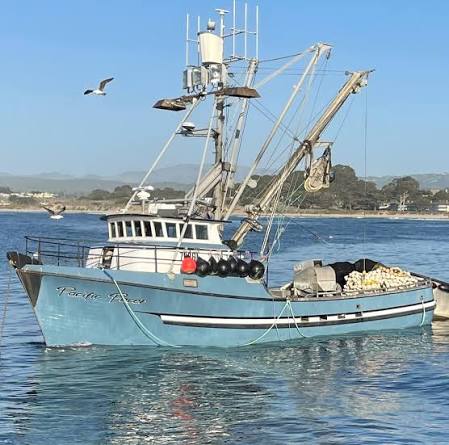
Closer to our era, Italian immigrants created whole industries we take for granted today. By 1921, Sicilian immigrants organized the West Coast Trawling Association, controlling a large share of seafood production along the Pacific coast. Andrea Sbarro and Pietro Rossi created Italian Swiss Colony wines which made California a vineyard in the 1880s. Later, the Gallo brothers shifted into high gear with mass produced wines. In 1919, Giuseppe DiGiorgio merged a table grape business with California (and Florida) plums, pears, and oranges, not only growing them but canning them under the White Rose or S & W labels. Antonio Cerruti and Marco Fontana did the same thing with their fruit and vegetable brand Del Monte.
Speaking of canning, the Dole pineapple slices you enjoy today were made possible by Henry Ginaca who invented the machinery to process the spiny fruit, which had previously been done manually. By 1915, the Ginaca machines put Hawaiian pineapples on American tables.
The man who put peanuts in our lives was Amadeo Obici who founded Planters Peanut in 1906. Before Obici, peanuts were sold in their shells. He shelled them, roasted them, mashed them, salted them, or sold them to confection companies for candy bars. The symbol of his company is Mr. Peanut, an American icon.
I guess you can say that much of our economic success was earned the natural way. –JLM
 John Mancini

Recent Comments