
Who were the pioneer U.S. government officials with Italian roots? The answers are more than names that belong in history books. In a tangible way they provide a measure of how far Italian-Americans have come in the greater American society. Let’s start at the top.
PRESIDENT
In 1969, when John F. Kennedy, an Irish-American, became president, pundits said he represented full acceptance for the Irish in American society. Alas, a similar Italian turn has yet to come.
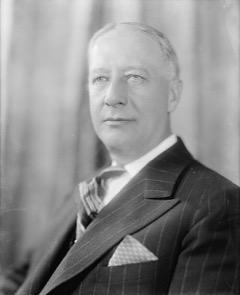
One Italian-American, however, did make a serious run for president nearly a century ago. Al Smith (1873-1944), then the governor of New York, became the Democratic candidate in 1928. Smith? That doesn’t sound very Italian. Besides, wasn’t he Irish?
Smith’s mother was Irish but his paternal grandfather, Emanuele Ferraro, was born in Genoa, Italy. The family name was Anglicized to Smith since Ferraro means Blacksmith in Italian or simply Smith in English. Al Smith was the first (and so far only) Italian-American to be a major party candidate for president . Due largely to the rampant prejudice at the time against Italians, Irish and Catholics, especially in the southern states, Smith lost badly to the Republican, Herbert Hoover.
Some sources claim John Adams, America’s second president and his son and sixth president, John Quincy Adams, both of Massachusetts, had distant Sicilian ancestors. Most historians doubt this. And even if true, the link is paper thin.
Mario Cuomo was considered a leading contender for the Democratic nomination in 1988 and 1992 but this 100% Italian-American governor of New York declined to run both times for reasons never made fully clear.
VICE PRESIDENT
There never has been an Italian-American vice president either. But Geraldine Ferraro (1935-2011), a three-term congresswoman from Queens, New York, whose lineage was 100% Italian, ran unsuccessfully for the post on the Democratic ticket in 1984. She was also the first woman of any ancestry to be a major party nominee for the post.
GOVERNOR
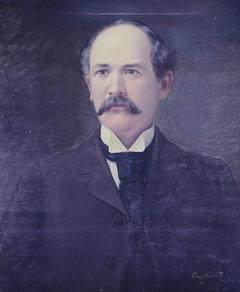
Arguably the most surprising Italic pioneer was Andrew H. Longino (1854-1942), the first Italian-American elected governor of any U.S. state. What’s more it was in Mississippi, a state with less than a 2% Italian-American population. His Italian ancestors were from the Venice area and he also had some non-Italian roots. He was the 35th governor of Mississippi, serving from 1900 to 1904. His election in the Deep South during a time of rampant anti-Italian bigotry is remarkable. During his governorship insurance laws were improved; the state archives department was founded, and construction on a new state capitol was authorized.
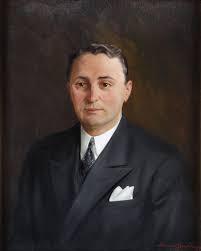
Charles Poletti (1903-2001) and Ella Grasso (1919-1981) deserve special notice. He was the first person of 100% Italian ancestry to become the governor of any U.S. state and she was the first woman elected governor of a state in her own right. He served as the 46th governor of New York, but only for one month: December, 1942. His predecessor, Herbert Lehman, had resigned the governorship a month early to accept a federal post and Poletti, who was the lieutenant governor, completed Lehman’s term. Grasso was the 83rd governor of Connecticut, serving from 1975 to 1980.
SENATOR
How about U.S. senator? That honor goes to John O. Pastore (1907-2000) of Rhode Island, who served five terms as his state’s senator from 1950 to 1976.
Pastore, a liberal Democrat, was a strong proponent of Civil Rights legislation, the Medicare program and the appointment of the first African-American (Thurgood Marshall), to the Supreme Court. Noted for his oratory skills Pastore gave a dynamic keynote address at the 1964 Democratic National Convention (the one that nominated Lyndon Johnson for president).
REPRESENTATIVE
And in the House? Francis B. Spinola (1821-1891), a general in the Union army in the Civil War, wounded in the Battle of Manassas, was the first Italian-American elected to the U.S. House of Representatives. A New York Democrat, he served two terms in office.
SPEAKER
The first woman and first Italian-American Speaker of the House of Representatives was Nancy Pelosi (born 1940), a Democrat from San Francisco. She served in that post twice, 2007-2011 and 2019-2023. She was regarded as a highly skilled leader and a formidable opponent.
BIG CITY MAYOR
Angelo Rossi (1878-1948) is arguably the first Italian-American big city mayor. He served as San Francisco’s 31st mayor from 1931 to 1944. But it all depends on how you define “big city.”
Fellow Italian-American Fiorello La Guardia (1882-1947), the 99th mayor of New York City, serving from 1934 to 1946, is considered the first by others. Besides, he is widely regarded as New York’s best mayor ever and in a survey of 160 historians, social scientists, and journalists was ranked as America’s best big city mayor.
So which man was first? Your choice. Note that at the time San Francisco’s population was 640,000, while New York City’s was 7,000,000 (almost 11 times larger). Interestingly, Rossi and La Guardia were friends, their terms as mayor overlapped for 10 years and both were nominal Republicans although they would be considered liberals by today’s standards.
CONCLUSION
When it comes to elective office in America there have been some remarkable achievements by Italian-Americans over the past 100-plus years. But there remain more glass ceilings for them to break. The White House is the most important one.
[Bob Masullo is a longtime associate of the Italic Institute and lives with his wife, Eileen, in Sacramento.]
 John Mancini
Interesting list…regarding Angelo Rossi, he was born in the motherload country or 49er gold rush area of California, where remnants of a thriving Italian American community lived since gold rush days. Also, what makes it hard to detect heritage for Italian Americans, is all the name changing that went on.
At a certain point in time in US History. Upward mobile Italian Americans, especially entertainers… did quite creative name changes….and perhaps because of religious proximity would change their surnames to Irish sounding last names. Sadly, a friend Rod Diridon passed away, and he was considered Mr. Public Transportation in the Bay Area…..His original name was Diridoni, and use to tell the story of his father changing his name to improve his employability. I guess it’s not so important these days, but I am sure for a politician I still think it help, given all the stereotypes that abound. Our 44th Annual Italian American Heritage Foundation of which he was such a strong supporter of, will be dedicated to his memory….and interesting, he grew up in rural Northern California…Siskiyou County. (In proximity to a major labor strike in the late 1800’s where the counsel general of San Francisco was called into arbitrate.
What about Rudolph Giuliani?
Previous mayors said that NYC was “ungovernable”,. these mayors have bridges, streets and buildings named after them. Giuliani has none.
At the time (before Giuliani”s term as mayor), people were putting bars on their windows A NYC newspaper commented that the good people were behind bars while the criminals were roaming the streets)
People bought the “red club”: an anti theft devise to lock into their steering wheel because car theft had sky-roketed.
subway ridership had fallen because gangs would hi-jack subway cars, steal , and in some cases murder the riders and run away at the next station .
Foreign countries discouraged their citizens from visiting NYC.
Murders in the city reached their highest.
Within his tenure, Mayor Giuliani made NYC the envy of the world. He was asked to help other cities and countries (Mexico ) how to fight crime in their cities.
How is that for a GREAT JOB that few, if any, can imitate!
Excellent article!
As for Pastore: Though short in stature (rather like LaGuardia), he was such an inspiring speaker and fundraiser that LBJ actually wanted him as his VP. And guess what?
The idea was squashed after aides suggested to LBJ that Pastore would be tainted due to the Valachi Senate Hearings on organized crime a year earlier. Stereotypes DO matter!!!
As for Giuliani: No disputing that he changed NY City from Hell to Hospitality Capital within his tenure. I saw the effects of it myself. He absolutely deserves full credit for this. Perhaps, like Tom Menino in Boston, he will have to wait until after his death for praise. However, Bob’s article was about Italian Americans who were the FIRST to hold an office, not about their deeds