
This just in: According to a June 21, 2026 article in Travel and Tour World Magazine, Italy has finally surpassed Spain and Greece in the so-called “Battle of the Mediterranean Countries,” an unofficial annual derby tracked by world-wide travel consultants. Despite Americans basking in the Tuscan sun, it turns out that la bell’italia has consistently fallen second to Spain over the decades via international tourist visits in general. So why the sudden turn?
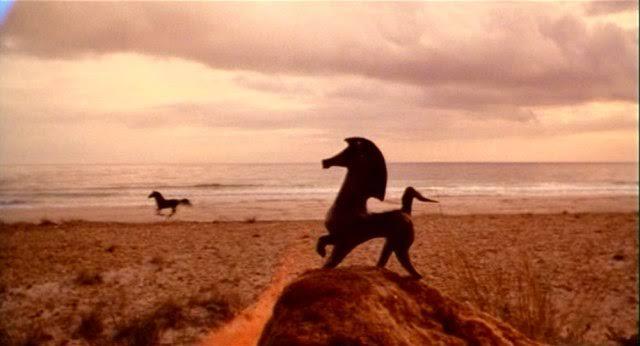
in the 1979 film, The Black Stallion.
Turns out it’s because of an old-school business term: “diversification.”
Though the Holy Trio of Rome/Florence/Venice remains popular, southern regions like Calabria, Puglia, and even Basilicata—not to mention the islands of Sicily and Sardegna (aka Sardinia)— are drawing far more unknown visitors to their shores.
Even the independent island of Malta, between Sicily and North Africa, which has some Italic roots, is showing an uptick.
The article credits more aggressive marketing in those regions as part of their success. Then there are the more obvious reasons, such as sunnier year-round weather, less expensive (for now) hotel and air prices, and the sheer novelty of moving beyond Rome and its environs. Taking a page from Columbus, tourists are undoubtedly looking past the Eternal City’s horizon and thinking, “There’s something out there.” Yes, there is.
Though I’ve yet to visit Sicily, Sardegna or Calabria, Puglia and Basilicata that have their eye-opening delights.
In Puglia, the lungomare (waterfront) in Bari, where fishermen trade their freshly caught fish, is a marvel. So is the nearby city of Lecce, called the “Florence of the South” for its rococo churches and well-to-do citizens. And Basilicata’s rise is chiefly the result of the spectacular rebirth of Matera, a city whose cave-like dwellings, a source of shame after WWII, have been transformed into ritzy hotels and served as a backdrop to new Hollywood films.
(Or, more specifically and ironically, to modern films wanting to look much older; e.g. Mel Gibson’s 2004 The Passion of the Christ, which used the still-evocative jagged hills and stark landscapes of Matera to suggest Jerusalem).
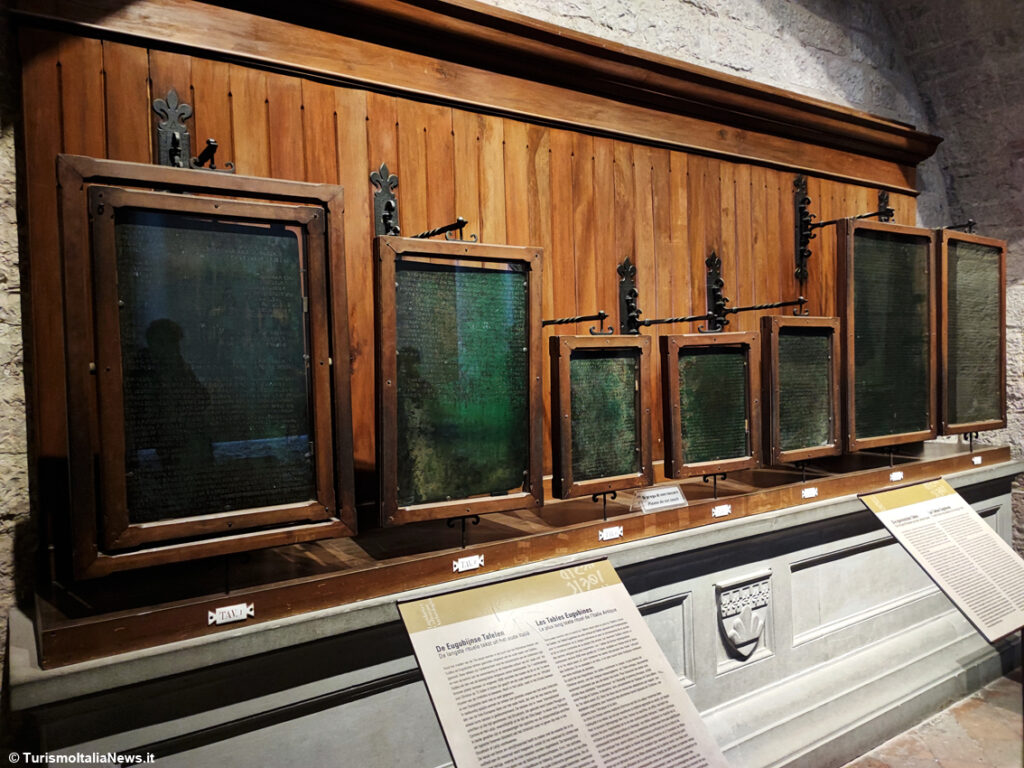
in the Umbrian Italic language
If you want to experience Sardegna’s mystical beauty closer to home, it’s fully on display in Carroll Ballard’s 1979 classic film, The Black Stallion. Ballard’s direction has a palpable Italic lyricism to it: The opening steamship sequence was shot in Rome’s Cinecittà studios, and its following island sequences, much of them shot in near-silence, use the power of Sardinian landscapes to convey both isolation and ecstasy. It goes without saying that one should experience this film on a big screen rather than TV. The latter is like viewing an El Greco painting on a postcard—a total diminuendo effect.
Another interesting thing noted in the article is that tourists are also exploring Umbria, the region next to Tuscany. Called “il cuore verde d’Italia,” (the green heart of Italy—it’s lush, like Ireland), Umbria used to be sarcastically known as “the Empty Tuscany.” This was a reference to how its next-door neighbor drew millions of tourists (mostly American) to indulge in author Frances Mayes’s romantic fantasy of transplanted wish-fulfillment. Umbrian towns like Spoleto (a sister-city to Charleston, SC, both of which sponsor annual arts festivals) and Gubbio (home to the enigmatic Iguvine Tablets, as well as an amazing Christmas light show on Mt. Ingino recognized by the Guinness Book of World Records) are finally getting their due.
(Previously, the only time tourists would dip their toe into land-locked Umbria was to take a quick visit to Assisi to pay homage to St. Francis.)
I think the rise of social media platforms like YouTube may also be a huge part of this. Today, anyone with a good cell phone can post their own amateur videos of trips to central and southern Italy—and do! They range from truly amateurish to clever and informative. Either way, those regions get free PR.
As the gist of the article points out, the expansion of Italian tourism is a welcome reminder that ALL of Italy is beautiful—a coherent whole, not a mess. –BDC
 John Mancini
and making these comments all the more relevant, so many people who have visit these areas become energized to join Italian Heritage organizations….especially those with little or no roots in the boot, and become enthusiastic members….so grateful for them, This should be considered in any community marketing and outreach initiatives if you are involved in Italian American organizations.
KEN: A single trip to Italy is a deal-breaker for many visitors, Italian or otherwise.
And I mean deal-breaker in a good way: their perception of Italic culture is altered.
The Italic Institute had a solution aimed at pre-teens: our AURORA program. You can see a video of it in our GALLERIA section. It targeted youngsters and was an It Am counterpoint to Greek School, Polish School, Hebrew School, etc. It fizzled partly because our organizational leaders didn’t want to invest in it via their gala monies.
And for decades, we’ve been touting the Italic equivalent of Birthright Israel, that is, sending It Am college students or professionals to Italy. The NIAF started something akin to this with their Voyage to Italy program; however, this is a mere pebble in the ocean. The target audience should be much wider, not just a who-knows-who list.
Our community has the money. Tons of it. Alas, they don’t have the vision. No one looks beyond Nonna’s (albeit delicious) meatballs or an annual gala where they can all shout “I’m proud to be Italian! ” (cries which dissipate once they leave the hall).
And they continue to ignore how endless mob movies, mob books, mob TV shows, mob YouTube videos, etc. undercut our heritage on a daily basis. All of the above are the gross equivalent of spitballs thrown at our brave, hard working, ancestors.
Italian Americans have “made it” in America, financially; but at what price? Our fellow Americans feel totally free to make fun of us, regardless of our achievements.
Hey, I’ve written eleven books about life of the single Italian girl of the l950s. No blood shed or murders… just real life. Well almost. So, I tell people you don’t have to buy my books to make me rich! But, if there’s someone you detest and obligated to give them a gift…give them one of my books.You don’t have to worry about size, color or style….and you may never see them again…..or….you may become good friends forever. Check Amazon.com. Okay, never mind. Have a great day.