
We’ve all heard the story of how America was named by a German mapmaker in 1507 after navigator Amerigo Vespucci announced that the islands Columbus had discovered were really two new continents. But why were both given the same name?
Actually, they weren’t. Martin Waldseemüller only labeled [South] America because Vespucci only explored that coastline down to Argentina. The German had no name for Giovanni Caboto’s landfall on North America in 1497. But he knew of it and had rough coordinates, enough to add that discovery to his map. Still, the name for the northern continent was up for grabs. Cabot should have named it for himself, as in “Cabotia” or better “Venetia” (ven-EE-sha) for the flag of Venice he planted on Newfoundland. However, like Columbus, Cabot thought he had landed near the coast of Asia.
Cartography abhors a vacuum and in 1538, another mapmaker, Gerardus Mercator, gave us the names North and South America. Imagine if you will a United States of Venetia, its citizens Venetians and its indigenous inhabitants Native Venetians. You’d get used to it; I promise. Note that when Vespucci realized he wasn’t near Asia he named one part of South America— where the natives lived on water—Venezuela (Little Venice). They are now proud to be Venezuelans.
There is still much we do not know about Cabot’s adventures in “Venetia.” Standard histories inform us that he landed in the New World on June 24, 1497, the second Italian to reach these shores. They acknowledge he was not English but a citizen of Venice, having moved there from the seaport of Gaeta, south of Rome. He was authorized by King Henry VII to find a route to Asia. Beyond that, the puzzle had lots of missing pieces. Yet, much has come to light from Italian sources.
We have a letter written by a fellow Italian in Bristol, England stating that Cabot planted both the English and Venetian flags on North America. He did so because England didn’t fund the voyage but only sponsored it. The cash came from Italian bankers, just like the deal Columbus had with Queen Isabel. Italian researcher Francesco Guidi-Bruscoli found a Florentine bank ledger that contained the following entry: “John Cabot, of Venice, on 27 April [1496], is debited for £10 sterling, paid in cash to Lorenzo Morandi towards the 50 nobles sterling [£16 13s 4d] our Aldobrandino Tanagli ordered us to pay him so that he could go and find the new land”
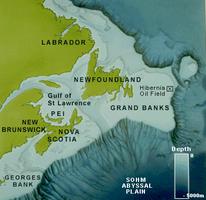
and Georges Bank cod fisheries
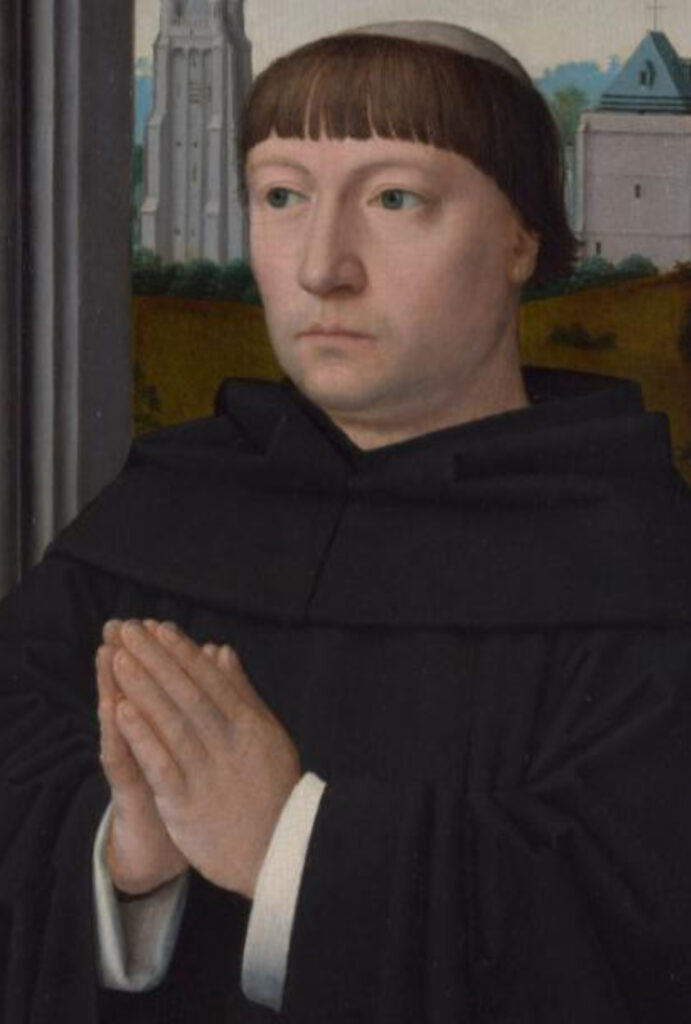
We have also learned that the go-between who introduced Cabot to King Henry was Fra Giovanni Antonio de Carbonariis, the papal tax collector for England—the country didn’t turn Protestant until Henry’s son Henry VIII took over. Carbonariis no doubt knew how Columbus was converting the natives to Catholicism in the Spanish territories and envisioned a Cabot voyage for the same purpose. This dream not only motivated an English sponsorship but included the friar’s own ambition to personally accompany Cabot.
As I have written in a previous blog, much of this new information came to light through the late English historian Alwyn Amy Ruddock on the Italian role in Cabot’s voyages. Fra Carbonariis didn’t go on Cabot’s first voyage but Ruddock believed he was aboard the second. The first was successful not only because Cabot reached new land—and returned—but because he discovered the massive cod fishery we now call the Grand Banks. For this the King awarded him an annual pension and approved a second voyage. [For you baccalà lovers you will be proud to know that Giovanni da Verrazzano later discovered the other huge cod fishery off of Maine known as Georges Bank. What haven’t Italians given the world!]
Cabot’s second voyage in 1498 included five ships and followed the North American coast down to Chesapeake Bay locking in England’s claim to the continent. Ms. Ruddock asserted that Fra Carbonariis remained in Newfoundland and built a mission there. If so, it would be older than the Spanish church in St. Augustine, FL by 67 years. Thus far, archeologists have not located it.
Oddly enough, the town around which the search is being conducted is named Carbonear. No one knows for sure how it got its name. I wonder. –JLM
 John Mancini
A fascinating piece of history, and one wonders why or what if Venetia had pressed some claims on the new world! God willing hoping to visit the maritime provinces this summer!!!!cant wait. And a friends first step in post war immigration was Halifax, and off to Toronto and Montreal.
Is anyone actively looking for that mission building in Newfoundland? If so, what a find!
I’ve been to St. Augustine. To its credit, they do mention the Italians of “New Smyrna.”
See brief AI summary below:
History: The “Minorcan” Settlers
The 1768 Expedition: The Italian connection to St. Augustine, FL dates back to a Scottish colonist named Dr. Andrew Turnbull, who recruited hundreds of indentured laborers from around the Mediterranean—including Greeks, Corsicans, and Italians from Leghorn (Livorno)—to work on an indigo plantation in New Smyrna, FL.
The 1777 Exodus: After enduring nine years of starvation and harsh conditions, the survivors fled 70 miles north to now British-controlled St. Augustine, FL in 1777.
The Heritage: Because the group intermarried and lived closely together, this blended community became known collectively as the Minorcans.
Their Italian and Mediterranean heritage still heavily influences local culture, including the popular regional dish Minorcan Datil Pepper Clam Chowder.
The search for the Carbonariis mission was on-going by Prof Peter Pope of a local university, but he died a few years ago. Maybe the guys from the cable treasure hunt show “Oak Island” would have better luck
good article. full of meaningful information about the role of early Italian explorers. Malaspina is less often cited for his role in the Pacific.