
A few weeks ago, the Wall Street Journal reviewed a book titled Gowanus Crossing. If ever there was a book ready for the trash heap, this is the one.
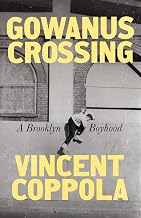
It is purportedly a memoir by author Vincent Coppola (no relation to Francis but clearly a clone of Scorsese) of growing up in Brooklyn during the 1960s. As usual, it conforms to the media’s enduring image of us since The Godfather.
I suspect Coppola is a Chazz Palminteri (A Bronx Tale) wannabe, to make his youth more interesting than it actually was. Just swap Brooklyn for the Bronx and make it a prequel to Goodfellas. Movie rights, anyone?
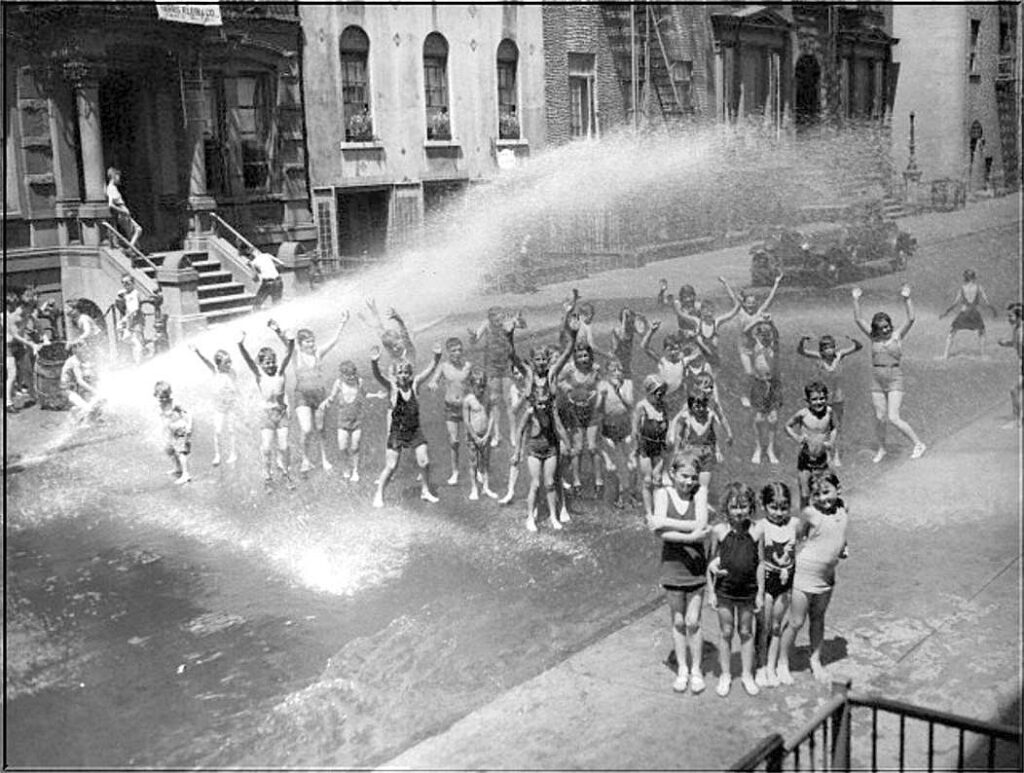
As it happens, Coppola and I are of the same age, and we were probably born in the same Brooklyn hospital. In fact, my old neighborhood was a mere eight blocks from his. I only lived there until age 4 but I returned to spend the summers of 1954 and 1955 with my aunt and cousins. As I read Coppola’s version of Brooklyn, I felt we experienced two separate worlds—his bizarre, mine just memorable. Granted he centered on the 1960s but we both came from identical Italian roots in neighborhoods indistinguishable in ethnic flavor. His poisoned view clearly stemmed from living on the Gowanus Canal, a stagnant inlet of the Atlantic Ocean that daily tides could never cleanse of the man-made pollution. To those who still have Pollyanna memories of mobsters protecting neighborhoods, Coppola recalls “wiseguys dumping medical waste into the canal.”
The streets of Gowanus, according to Coppola, were a jungle where few kids lived to see their 30th birthday. In addition to the health risks, Italian American culture itself was apparently a hazard. “Born in a place where education is ignored, criminality encouraged…they perish in a whirlpool of illness, poverty, violence, despair, and dysfunction. The same wiseguys I considered heroes [were dealing in Mexican heroin in the 1980s.”]
Indeed, like his namesake Francis, this Coppola revered the thieves and murderers who now define our culture. The big question is how did Vincent Coppola or I, for that matter, survive Brooklyn and Italian American culture? Is there a rare gene that makes some Italians normal?
Coppola sets out early to tell readers he was always a wiz kid. Accepted at five parochial high schools in spite of a rude awakening by his junior high teacher Sister Mary Malachy. After handing in his assignment—a creative autobiography—he is asked to stand before the class for what he thinks is a laudatory review. “I never see it coming, a sweeping right-hand punch [by Sister Mary] that knocks me against the blackboard. Then, the billowing sleeves of her brown habit flying, she pounces with a flurry of slaps, I too stunned to parry.” Seems young Coppola plagiarized the John Wayne movie Sands of Iwo Jima. Unfortunately, Sister Mary had seen the movie too.
So, this is Coppola’s Brooklyn: sadistic nuns, pedophile priests, juvenile delinquents, crooked cops, and mobsters galore—all doomed to become standard dago movie characters. His own father and uncle once took turns kneecapping each other with a hammer for an insurance scam. Only Coppola was salvageable. Eventually, he goes to law school, teaches English at a vocational high school, graduates Columbia University School of Journalism with honors, and becomes a reporter for Newsweek Magazine.
The only evidence of Italian pride in this memoir are the old photos of his family. Photos from the 1930s and 40s show relatives in suits and ties, people with a dignified Old-World bearing. Into the 1950s, 60s and 70s, their descendants become more street types. It is a microcosm of our community in general. Most of us extracted the dignity and pride in heritage despite the poverty and bad influences, others of us mistook the street for italianità. Puzo, Francis Coppola, Scorsese, and Chase exploited that fact.
In his acknowledgments, Coppola thanks two Italian Americans at Holt Publishing for “assuring him that his Gowanus tales will resonate among a new generation of Italian Americans.”
Sadly, it already has. –JLM
[To read my Brooklyn memories from 10/2/2019 just let me know and I’ll email it to you.]
 John Mancini

The word is getting out. Link below to the Atlanta-Journal Constitution’s review.
Funny how Coppola “misses” the sense of life he ultimately portrays as plug-ugly.
The social ills he posits are clearly a result of being Americanized. As pointed out, his Old World relatives had “dignita’.” So how did it leak out of the rest of them like a balloon? Maybe America the Beautiful is also at fault? He doesn’t investigate this.
https://www.ajc.com/arts-entertainment/2026/06/harrowing-gowanus-crossing-captures-vanishing-sense-of-community/
More examples by Coppola of OPPORTUNISTS RATS!
You and Vincent DID grow up in two different worlds, John. In any neighborhood, of any ethnicity, you can find a criminal element if you look for it. You didn’t. He did.
What is surprising is that a man of Vincent Coppola’s intellect and academic accomplishments chose to seek it. (Or, more likely, imagine it.)
I had frequent contacts with two Little Italies growing up — Italian Harlem in Manhattan and Arthur Avenue in The Bronx. I had numerous relatives in both and visited them often. They were wonderful times, filled with good music, delicious food and fun with loving people. Not a single criminal in the lot.
A man with Coppola’s talents could have been an asset to Italian America. Why did he chose to betray it instead?
What Italian America needs: More Mancini’s, less Coppola’s.