
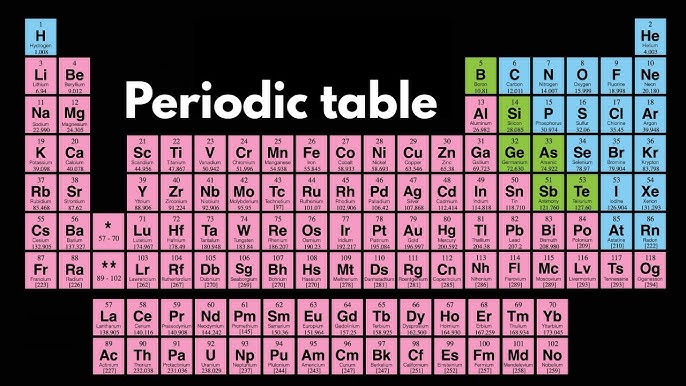
Remember taking Chemistry in high school? It was often fun, especially when you partnered up with a classmate to take the pressure off, or when the teacher demonstrated dramatic chain reactions. Prominently displayed in that classroom or lab was the Periodic Table of Elements. Every natural element on Earth and man-made ones are arranged according to “atomic weights” and uniform scientific measurements. Although this Table was first assembled in 1869 by a Russian chemist, he relied on the work of an Italian to unlock the once-mysterious order of the natural world.
That Italian was Stanislao Cannizzaro (1826-1910), born 200 years ago on this day and ever known as the “Father of Chemistry.” I’ll admit that the name was familiar as well as the accolade, but I had no idea exactly how he “fathered” chemistry. It is an interesting story, and it demonstrates how our heritage is so complex but very much a continuous chain, even back to Roman times.
Before there was a Periodic Table of Elements, chemists were at odds on how to relate metals, gases, and minerals to each other with some kind of common traits like atomic weight. Just as plants and animals had been classified into categories and characteristics back in the 1700s, chemists wanted some logical system for elements. By the 1800s, scientists knew elements were composed of atoms and molecules, but they had no way of knowing how many atoms were in a cup of water or how many in a gas like oxygen. Without this information mixing them into new compounds would be like baking a cake without a recipe or standard measuring cup.
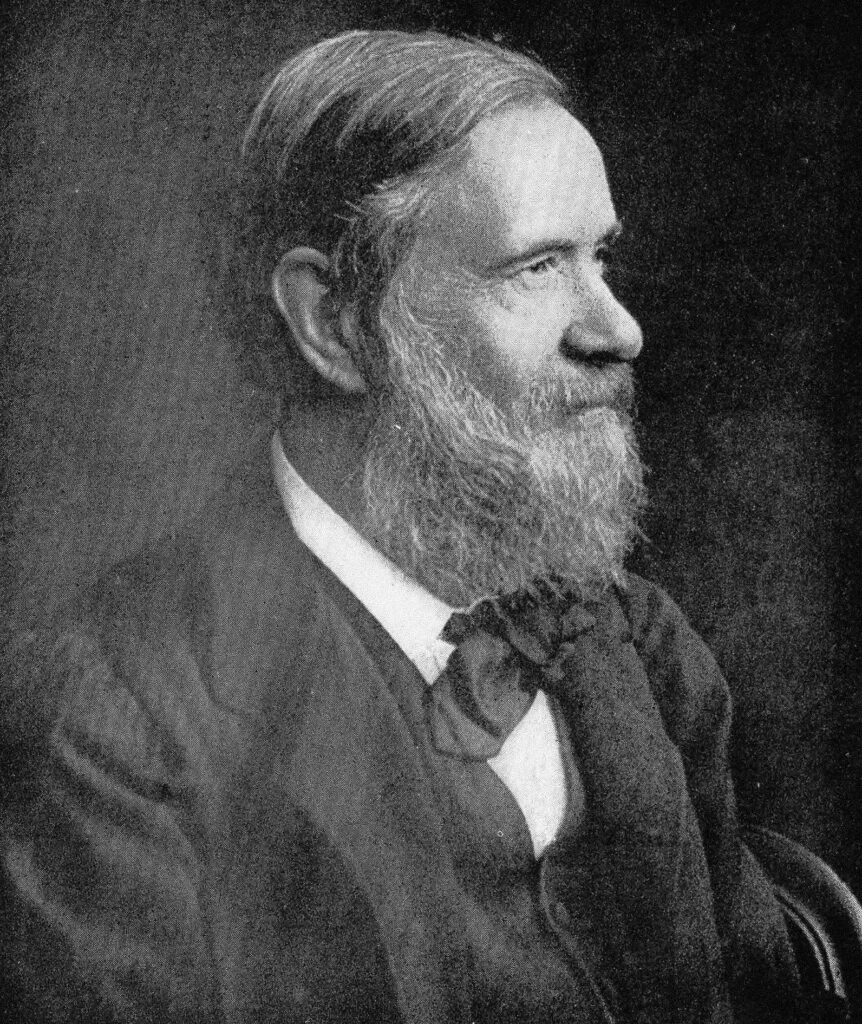
“Father of Chemistry“
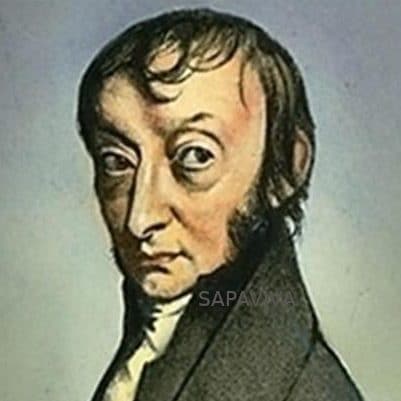
In 1860, chemists from around Europe met in Germany to figure out a way to compare elements. Everyone had a different idea and consensus was elusive. But a 34-year-old chemist from Palermo thought he had the answer. Stanislao Cannizzaro brought with him a study he put together—complete with mathematical proof and consistent with the laws of Nature—which he handed out to the attendees. His idea was to revisit the work of another Italian scientist from Lombardy named Amedeo Avogadro (1776-1856). Fifty years before, Avogadro suggested a way to count atoms and molecules in gases: “Equal volumes of gases under the same conditions of temperature and pressure will contain equal numbers of molecules.”
Cannizzaro essentially proved this theory was valid, with minor exceptions, and that it did not violate any known laws of Nature. He further confirmed Avogadro’s formula to determine the weights of atoms and molecules in a chemical reaction, now named Avogadro’s Number or Constant. (I’ll spare you that formula since I haven’t a clue what it means.) For this breakthrough, Avogadro is hailed as a Founder of the Atomic-Molecular Theory.
Cannizzaro now urged the conference of chemists to adopt this system as a way to replace the haphazard guesswork they had been using. Over the next few years, Cannizzaro helped iron out some bugs in the theory to the satisfaction of the opposition. One of the attendees at the German conference was a Russian named Dmitry Mendeleev who later created the first version of the Periodic Table of Elements with 94 natural elements based on Cannizzaro’s atomic weights. To date, the Table is now up to 118 elements, including 24 man-made ones.
Both Cannizzaro and Avogadro stand on the shoulders of Roman naturalist Titus Lucretius Caro (99 B.C.- 55 B.C.) who improved on the Greek theory of moving atoms by adding “the swerve,” basically he attributed “chaos” in the universe to explain how atoms escape their rotation and form new compounds—just as oxygen and hydrogen form water.
Another son of Italy who utilized the groundwork of our ancestors was Enrico Fermi who mastered nuclear energy and brought us into the Atomic Age. Italy has been blessed with genius in every field, from every region over a span of 3,000 years.
I want to note that my colleague Rosario Iaconis’s late father Antonio was a chemist from Calabria, educated at Pisa University, who immigrated in 1950 and became Director of Central Testing Laboratories (Amstar Corp) for Domino Sugar. Such are the scions of Italy. -JLM
 John Mancini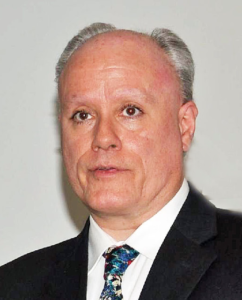
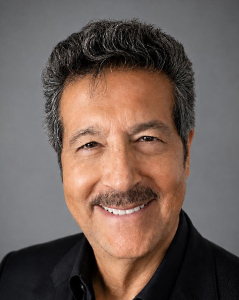
A “continuous chain” of genius indeed, right up to the distinguished Signor Iaconis.
Ben fatto!
How incredibly sad that the great majority of It Ams can’t see past Nonna’s meatballs.
The following additional achievements (taken from the Wikipedia article on Italophilia) may also be of interest to readers:
Bonaventura Cavalieri, a Jesuit priest and mathematician, born in 1598, is known for his work on indivisibles, a precursor of infinitesimal calculus, and for Cavalieri’s principle in geometry, which partially anticipated integral calculus. Joseph-Louis Lagrange, born Giuseppe Luigi Lagrangia (1736–1813), was a mathematician and astronomer. He originated the Calculus of Variations and made significant contributions to the fields of analysis, number theory, and both classical and celestial mechanics. Lagrange was also a member of the committee of the Académie des Sciences that developed the Metric System.
Toward the end of the 19th century, mathematicians Gregorio Ricci-Curbastro and Tullio Levi-Civita developed tensor calculus, which provided the mathematical framework for Einstein’s General Theory of Relativity in the early 20th century.
Galileo Ferraris (1847 to 1897) was one of the pioneers of AC power and an inventor of the AC induction motor. His work on the induction motor and power transmission systems is widely regarded as technological achievements of the highest rank. At the same time that German scientists were making major advancements in physics, beginning with Max Planck, Italian scientists like Fermi’s Via Panisperna group in Rome were making important fundamental discoveries in physics as well.
I forgot to include Galileo, the greatest of all. Born in 1564 in Pisa, he was the most famous scientist of his age and played a major role in the Scientific Revolution. He is often referred to as the “Father of Modern Science”. His achievements include a greatly improved telescope, which he employed in making astronomical observations supporting the heliocentric theory of Copernicus; and, also, the experiments he carried out leading to his law of falling bodies, which was of key importance in Newton’s synthesis of his own famous three laws of motion.
The connection of the previously mentioned Italian, Lagrangia, to Newton is that he reformulated Newton’s Laws into a more general form, which Einstein used in his General Theory of Relativity. So, both the mathematical and physical basis of Einstein’s work was based on the precedents set by Italians.
Thanks, Mario
Perhaps someone should make a list of all the Italic people who were “Fathers” of the various sciences; a list to join one of all our explorers. It would be an amazing revelation and eye-opener.
Thank you for including my father among the pantheon of Italian geniuses. He was both my role model and hero.
Fantastic information, as always great job John and the IIA.