
“We are the sowers – our children are those who reap. We labor so that future generations will be better and nobler than we are.” –Maria Montessori
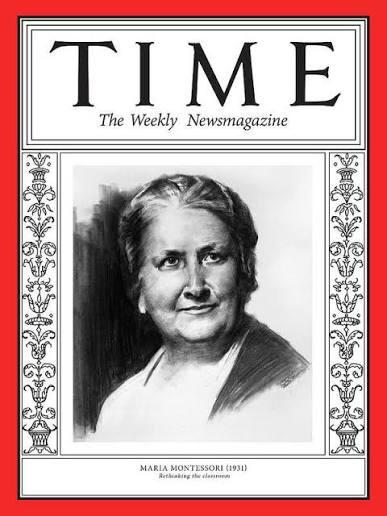
The Italic people are no strangers to education, from Marcus Fabius Quintilianus (aka Quintilian) of classical Rome to Vittorino da Feltre of il Rinascimento. But one of the greatest teachers in history—a woman whose name is even known by most Americans, thanks to the numerous schools in the US founded in her name—was Maria Montessori.
Born near Ancona in 1870 (interestingly, the same year as another visionary, Bank of America founder A.P. Giannini, was born in San Jose, CA), Montessori tapped into the innate creativity of children by removing the shackles of rote learning. She allowed their imaginations to roam free and called the years between the ages of birth to six “the Absorbent Mind,”—that is, a period when the “sponge-like” brains of youngsters easily absorb languages, experiences, and cultures. Her methods were so successful they brought her worldwide admiration.
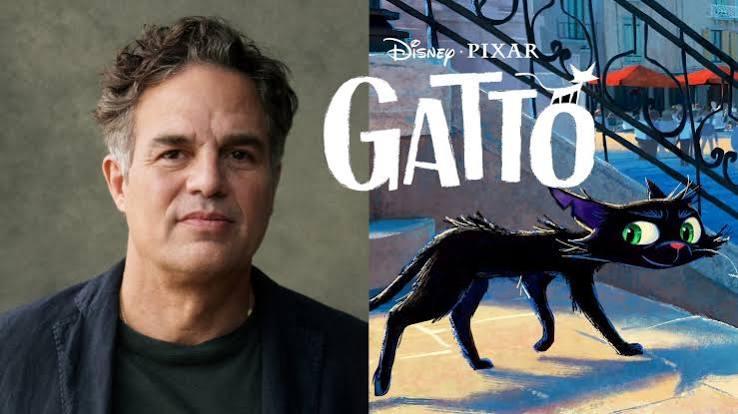
I could hear Montessori weeping when I discovered that the upcoming Pixar animated cartoon Gatto, scheduled for release in the Spring of 2027, features a criminal Black cat in Venice named Nero who works for a “feline mob boss” (!). Yes, the media’s relentless negativity toward Italic culture—including giving the title character the name of a notoriously nutty Roman emperor—is now catnip for young children.
To borrow US Army lawyer Joe Welch’s famous dig at Senator Joe McCarthy during the 1950s hearings: “Have you no decency, Hollywood?” Actor Mark Ruffalo, who champions diversity, provides the voice for the mafia cat.
La La Land certainly didn’t have any such decency back in the day. Racial caricatures ran rampant, even in animated cartoons. We all know the infamous examples, such as the Black crows in Dumbo (1942) and the Mexican-accented birds in The Three Caballeros (1944). Even 1949s Song of the South got away with showing shuffling Uncle Remus enjoying life on the plantation, a concept which didn’t extract much outrage until the start of the Civil Rights movement. Black activists seized on that cartoon’s insensitivity to the point that Disney since banned the movie.
Cut to 1992. Disney released Aladdin, based on the Middle Eastern folktale. Though a success, it was hard-earned. Critics were not amused by the cartoon’s cultural stereotypes. Roger Ebert of the Chicago Sun-Times wrote that “most of the Arab characters have exaggerated facial characteristics—hooked noses, glowering brows, thick lips—but Aladdin and the princess look like white American teenagers.”
images for everyone but Italians.
Things got worse: The American-Arab Anti-Discrimination Committee condemned the film’s song Arabian Nights for its “racist lyrics.” The words in question referred to the Muslim world, where they “cut off your ear if they don’t like your face.” The pressure worked: The lyrics were changed to “where it’s flat and immense and the heat is intense.” And this was a decade before 9-11, with its anti-Muslim tropes.
But Disney, and Hollywood, learned its lesson. To wit: Teaching prejudice to impressionable children is verboten . The industry did a complete 360-degree turn—and rightly so—when it came to children’s animation. After 1991, studios made “respect for diversity” a priority. Cartoons shouldn’t just be mindless fun. They must also promote positive images about different races and cultures. Teach ’em when they’re young! It’s a concept with which the great Montessori would heartily agree.
Disney produced cartoons like 1992’s The Lion King (Africans); 1995’s Mulan (Asians); 1998’s Pocahontas (Native Americans); 2009’s The Princess and the Frog (Creole culture in New Orleans); 2012’s Moana (Pacific Islanders); and 2021’s Encanto (Hispanics).
Pixar, its upstart rival (since absorbed by Disney in 2006), followed suit with cartoons like 2012’s Brave and 2015’s Inside Out (female empowerment); 2016’s Oscar-winning Zootopia (respect for diversity); 2017’s Coco (Hispanics); and 2020s’ Soul (African Americans).
Were any of the characters in Coco connected to Mexican drug cartels? Of course not. Did any of characters in Soul carjack anyone? Again: Of course not. I’m using these grotesque examples to make a point: No such sensitivity exists when it comes to Italian Americans.
we got to Peter Falk
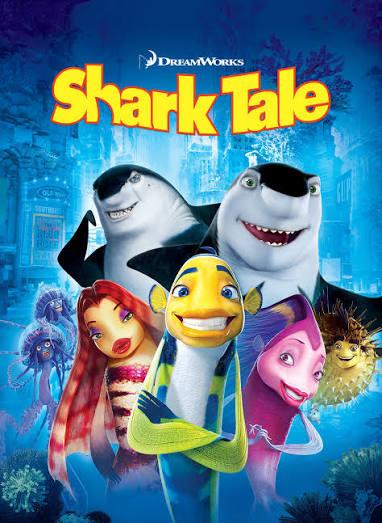
What did our community get out via Hollywood’s enlightened modern attitudes? We got 2004’s Shark Tale, featuring killer mafia sharks (!!), and 2016’s Zootopia, a film about tolerance in which a little shrew animal mimics Don Vito Corleone from The Godfather. Grazie!
There had been gross, anti-Italian cartoon images before. In 1991, The Simpsons TV show introduced the character of Fat Tony, a crude, gun-toting mobster. In 1993, Steven Spielberg, of all people, produced Goodfeathers, featuring a trio of pigeons clearly based on Martin Scorsese’s Goodfellas movie. And in 1999, the Muppets Tonight show did a parody sketch called The Frogfather, based on–oh, you know.
Perhaps the sickest example of all is from 1998’s Doctor Dolittle: a caged animal, voiced by comedian Chris Rock, asks out loud, “Hey, why they call me a guinea pig anyway? I’m not Italian!” (Also in 1998, adult viewers were treated to Will Smith’s character in Enemies of the State referring to Italian Americans as “Guido motherfuckers.” I recall seeing that film in a theater. The audience laughed uproariously.)
But back to Shark Tale.
Institute members may recall that prior to Shark Tale being released, when we first heard about its production, we actually made some media headway, calling attention to this blatant Hollywood hypocrisy. Our co-founder, John Mancini, was featured in a major article in USA Today (with a photo). In the piece, Mancini noted a small IIA victory: We personally contacted actor Peter Falk, a previous honoree at one of our dinners at the Waldorf-Astoria, and pointed out our displeasure in his playing an Italian mafia fish. Falk had the character’s name changed to “Don Feinberg” (Jewish, which was Falk’s heritage). It was a start, even though the film’s crude crime premise remained.
The USA Today article—which went, in today’s vocabulary, “viral”—also clearly unnerved studio execs at Dream Works. (Yes, Steven Spielberg’s company. Are you detecting a pattern?) They literally altered the content of the film’s WIKI and IMDB (International Movie Data Base) internet accounts, removing the characters’ names and the cartoon’s plot. We also staged a live protest outside of an early screening of the completed film at Tribeca Studios in New York, where we managed to distribute anti-Shark Tale materials to viewers waiting in line.
Perhaps the most effective tactic came from the late IIA member Walter Santi of Illinois. Walter phoned an Italian language newspaper in Italy (no cell phones back in 2004, mind you) and asked a reporter covering the Venice Film Festival to confront Robert De Niro at a press conference. De Niro, who had just been honored by a major Italian American organization two years earlier, voiced the role of “Don Lino,” the chief mafia fish-boss in Shark Tale. The reporter did her job. When asked why he was promoting stereotypes to children, De Niro, clearly taken aback, referred to Italian Americans protesting the film as “stronzi” (basically, Italian slang for “assholes.”). He would know!
Shark Tale, as we predicted it would, opened the floodgates to this pernicious denigration of our culture. Even our kids weren’t safe.
There was 2004’s Shrek 2, where Pinocchio is revealed to be a cross-dresser; 2005’s Racing Stripes, with a mob-connected pelican; the 2013 television version of the 2006 book Nicky Deuce, about a 12-year-old suburban Italian American boy who learns what ‘being Italian’ is really all about when he spends the summer with his crude Brooklyn relatives; and, of course, there is the on-going appearance (post 30 years!) of Fat Tony the mobster on Fox-TV’s The Simpsons.
Cut to 2020 and the misery of COVID. Despite the sense of everything being frozen (btw, 2012’s cartoon Frozen was a positive take on a Norwegian folk tale), there was a ray of hope amidst the gloom: Pixar announced a new animated film called Luca, set in the Cinque Terre region of Italy. More mafia sharks? No. It was an animated cartoon which actually treated Italian culture with some respect and affection.
It made sense that the film’s director, Enrico Casarosa, was an Italian-born animator, working for Pixar/Disney. Clearly, Casarosa wanted to finally break through Hollywood’s relentless negativity toward Italy and Italian culture. Or so I thought.
The director of Gatto is the same man: Enrico Casarosa. Obviously, something has changed. Aside from the absurdity of having “the mafia” being associated with the city of Venice (huh?), there’s the shift to promoting the same old criminal stereotypes—and, again, to kids. Why?
It’s a question which Dottoressa Montessori must be asking herself in the Heavens. –BDC
 John Mancini
Recent Comments