
With colder temps comes thoughts of colder climates—the state of Alaska, for example. Never visited, but it’s on my (ice?) bucket list.
Why Alaska? Well, everyone knows Mt. McKinley—or, rather, its original Indigenous name of Denali (“the tall one”). It was renamed Mt. McKinley in 1917 to honor President McKinley. Cut to 2015, the name was restored to Denali again by President Obama prior to a trip to meet Native Americans there.
Now cut to 2025, when another US president, Donald Trump, renamed it Mt. McKinley, reasserting US dibs on it. Expect another change in 10 years.
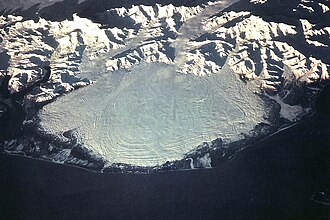
What most people don’t know (I did not until recently) is that Alaska also boasts one of the largest piedmont glaciers in the world. In this case, piedmont refers to the rock below the ice, which spreads out toward a valley like a huge fan. See the WIKI write-up on the glacier below, as well as a picture.
The WIKI piece even mentions the glacier’s name: Malaspina. Another Indigenous term? No, it’s named after the Italian explorer who visited it in 1791.
What? An Italian on Alaskan soil when the American nation was still a baby in its crib? As crowds say at the end of the Italian National Anthem: “Si!”
When it comes to Italian American history, much of it starts, according to both our media and to Italian Americans themselves, with the Great Wave of 1880-1920. This is understandable, particularly as most Italian Americans never look beyond the (legitimate) sufferings of their hard-working ancestors.
Almost every other American ethnic or racial group (Irish, Jews, Greeks, African Americans, Asians, et. al) can similarly say the same. But when those groups use the word “ancestors,” they’re not just talking about first-generation great-grandparents or relatives who were egregiously enslaved.
They mean people from way back in their history—i.e., before America was even born. Like, way before.
Greek Americans don’t just talk with pride about Michael Dukakis, the Democratic nominee for U.S. President in 1988. They talk about Plato, Aristotle and “democracy.” Irish Americans still revere JFK, but also relate stories of the heroic, pre-Christian, Celtic tribes of yore. African Americans may admire Dr. Martin Luther King Jr., but they also know about early African empires like Nubia and Mali.
Yet Italian Americans can’t seem to grasp that their own ancestors have a history stretching back even further than many of the above groups—between 2,500-3,000 years, in fact. Only China, Egypt and the once-powerful Mesopotamia (present-day Iraq, Kuwait, Turkey and Syria) can claim an equally long lineage.
Still, even though 1791 isn’t that far off, it’s certainly fairly impressive. So, what was a man named Malaspina doing here—and in Alaska, of all places?
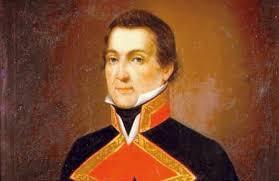
Alessandro Malaspina worked for the Spanish government (Italy didn’t become reunified as a nation until 1861) and made two famous expeditions— the first from 1786-1788, a so-called “voyage around the world,” and then from 1789-1794, exploring the Pacific Ocean. The latter is from whence the glacier took his name, as Malaspina mapped much of the west coast of the Americas, from Cape Horn to the Gulf of Alaska. As if that weren’t enough, he also visited Guam, the Philippines, Australia, New Zealand and Tonga. (Indeed, a fiord in New Zealand is also named after him: Malaspina Reach.)
Despite his accomplishments, he became mired in Spanish politics, was accused of plotting to overthrow the government and was sent to prison from 1796-1802. That’s gratitude for you! His crime? He advocated that Spain free its colonies and become a confederation. During revolutionary times, when both England and France had recently experienced major social upheaval, that was not a popular idea. Yet even Napoleon lobbied to have him freed. Malaspina eventually was and returned to Tuscany, specifically Pontremoli, where he died of an intestinal illness on April 10, 1810, age 55.
Wouldn’t his life story make for a superb epic film or mini-series? Certamente! Would Italian Americans support it? I’m really not so sure.
As posited earlier, the great majority of them can’t see past Nonna‘s kitchen or mob movies. They seem themselves as the children of immigrants. Yet here is where, if you’ll pardon the pun, they miss the boat: Malaspina is just one in a long line of great Italic navigators—Columbus, Vespucci, John Cabot (born Giovanni Caboto), Verrazzano, Tonti, and Beltrami. Italy may have not been united, but one thing did unite them all: Italic greatness. We are as connected to them as modern Chinese people are to the artisans who built the Great Wall of China. Exploration is in our blood.
It is time for Italian Americans to look beyond their own wall of casual indifference. Maybe then we can start “unfreezing” the image of Don Corleone. –BDC
The Malaspina Glacier (Tlingit: Sít’ Tlein) in southeastern Alaska is the largest piedmont glacier in the world. Situated at the head of the Alaska Panhandle, it is about 65 km (40 mi) wide and 45 km (28 mi) long, with an area of some 3,900 km2 (1,500 sq mi),[1] approximately the same size as the state of Rhode Island. The Tlingit (Indigenous Peoples’) name translates to “big glacier.” The colonial name for the glacier is in honor of Alessandro Malaspina, a Tuscan explorer in the service of the Spanish Navy, who visited the region in 1791. In 1874, W. H. Dall of the United States Coast Survey bestowed the name “Malaspina Plateau” on it, not realizing its true geological character.



Excellent find!
Great job
Ottimo lavoro, Guglielmo! You’ve brilliantly showcased Malaspina’s astounding Arctic achievement, one that underscores the greatness of a people.
FRANK AND ROSARIO: Thanks! Keep up your fine work, too.
I was truly blown away when I accidentally stumbled upon this factoid. I had no idea.
It truly does underscore a greatness which most Italian Americans casually ignore.
Whenever I think of Alaska I think of my Zio Baggio..(Uncle Bill) wounded for life in the only battle fought on US territory, the Aleutian Islands, and the tragedy was compounded by my Calabrese grandmother having to go through all sorts of red tape to visit him at a Veterans hospital because she was an “enemy alien”…. that was unfortunately a comon scenario for many Italian Americans of that era….
When we focus on Italian American history as you noted about Admiral Malaspina , we usually ignore the Spanish side of Italian Heritage , since the Spanish empire included Southern Italy and the Kingdom of the two Sicily’s…There were quite a few Southern Italians in the service of the “Spanish empire”…..down my way is the Viceroy named Branciforti…..a Sicilan Nobelman in the service of Spain and centered in Mexico….and the original name of the town of Santa Cruz Calif was named in his honor, Branciforti…..then the explorer in the southwest Father Kino (Chino)…all part of the pageantry of Italians in the new world……
Not to forget that San Francisco was named for an Italian saint
JOHN: San Francisco also has St. Francis of Assisi Church, based in the North Beach area. It is frequently overlooked by the bigger St. Peter and Paul Church a few blocks away, where the Di Maggio family and other local Italians worshipped. And last December, one of the
co-founders of the historic Caffe Trieste, Ida Giotta, passed away at 101 years old.
A nearby street marker in North Beach also honors poet, author and founder of City Lights Bookstore, Lawrence Ferlinghetti, who passed away a few years ago at 102.
They’re serving some really good espresso on the West Coast!
KEN: Yes, Branciforte changed its name in 1850. That’s a good example of how so many people who are identified as “Spanish” are of Italian origin. Note “Juan Bandini,” born in Peru, credited as the founder of San Diego. Dig a bit further and it turns out that his father, according to his WIKI bio, had “most, if not all, largely Italian roots.”
As for Father Chino/Kino: There is a huge monument to him in the middle of a park outside of the train station in Trento, noting his exploration to the Americas. Interestingly, he is referred to as a Trentino, not “Italian,” another example of Italy’s jumbled history.