
There’s been much media coverage of the opening of the Grand Egyptian Museum in Cairo this month. The billion-dollar colossus houses the largest collection of ancient Egyptian artifacts ever assembled including all of King Tut’s burial treasures.
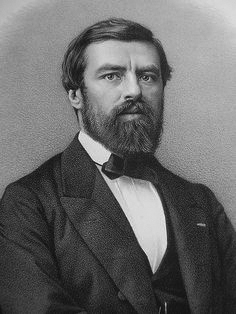
Coincidentally, November 15th is the birthday of Giovanni Battista Belzoni, born in 1778, the man responsible for some of the first archeological digs in Egypt.
Modern Egyptology began with another Italic figure, Napoleon’s Egyptian campaign in 1798. That was the same campaign that uncovered the Rosetta Stone, the key to translating Egyptian hieroglyphs (that’s a story on its own!). With Napoleon was French scholar Jean-Francois Champollion, who continued to explore Egypt until his death in 1832. His teammate throughout was the Italian Ippolito Rosellini. With Champollion’s death Rosellini published the multi-volume work I Monumenti dell’Egitto e della Nubia, with 3,300 pages of text and 395 illustrated plates. Rosellini died in 1843.
Another Italian was also digging around Egypt even earlier. Giovanni Battista Belzoni was not a scholar but a hydraulic engineer. A man of exceptional strength who towered over most people at a height of 6’-7”. He married a English woman, learned the language and eventually ended up in Egypt working with a British consul in Cairo named Henry Salt. Salt hired Belzoni to find and excavate ancient Egyptian tombs and artifacts.
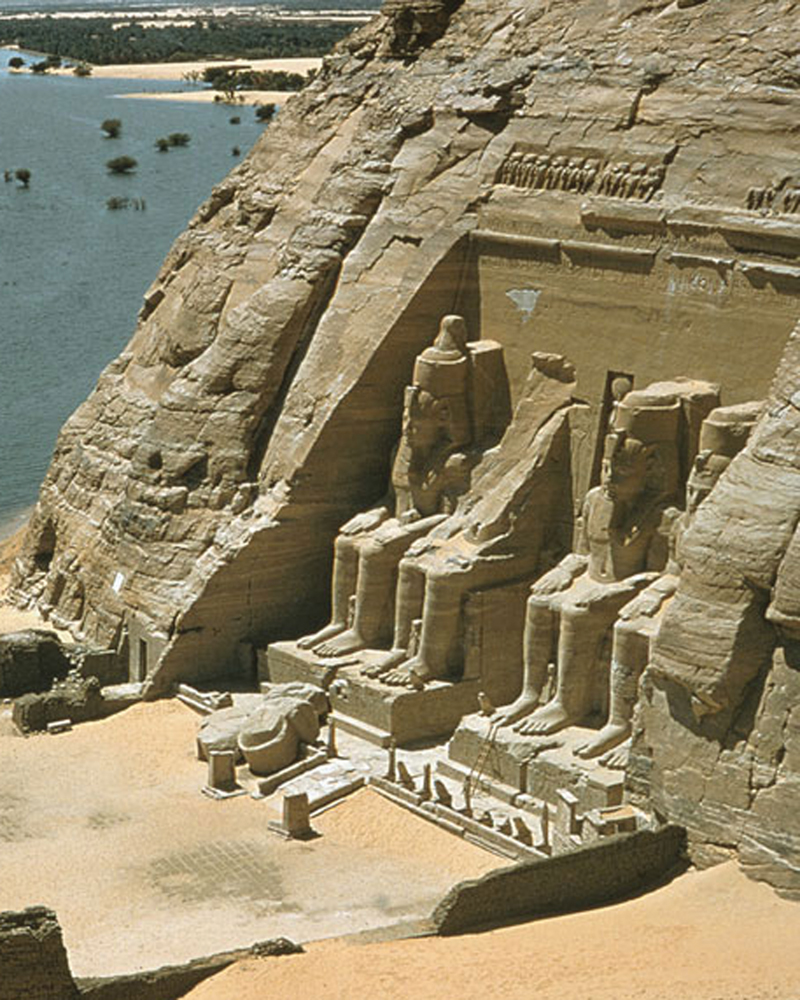
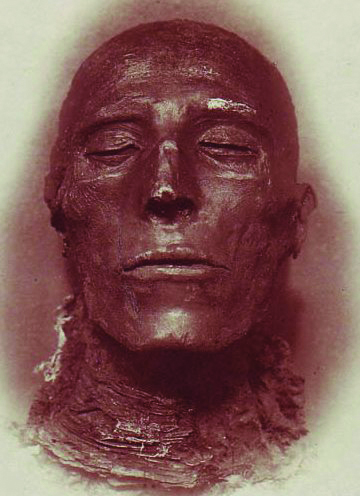
In 1817, Belzoni discovered the entrance to the monumental temple of Rameses II at Abu Simbel, becoming the first man to enter it in 3,000 years. He then crossed to the other side of the Nile to the Valley of the Kings where he discovered the tomb of Seti I, father of Ramses II, who ruled Egypt 1,300 years before Christ.
(As a side note, when the Aswan Dam was in progress in 1968, the Egyptian government hired Italian engineers to relocate Rameses’ temple to higher ground. The project was an engineering marvel.)
Finally severing ties with Henry Salt in 1818, Belzoni traveled to Giza and became the first person in modern times to enter the 4,000-year-old Pyramid of Khafre, which was believed to be impenetrable. After three weeks of searching, he was able to find the entrance and access the central chamber of the pyramid.
He returned to England in 1819 and the following year published a two-volume account of his discoveries. This predated the Rosellini books mentioned above. This was the first research book published in England about Egyptology and had three editions. Achieving another first, Belzoni opened a mummy in front of the Royal College of Surgeons to the amazement of the doctors and scientists attending. London warmed to the renowned Italian archaeologist and thrilled to his adventures. In May 1821, Belzoni opened an exhibition called the Egyptian Hall in Piccadilly where he displayed numerous artifacts including plaster casts from the tomb of Seti I.
But the keen interest in Egyptology that had swept London soon faded. Belzoni believed that he had still not received the expert recognition he deserved. In 1823, he set out for what proved to be his last adventure to explore the legendary city of Timbuktu in West Africa. He was able to reach the Kingdom of Benin where he caught dysentery and died on December 3, 1823, at Gato. His body is buried in a nearby village. In 1825, his widow exhibited his drawings and models of the tomb of Seti I in Paris and London.
As the result of his many discoveries and excavations, Belzoni is credited with laying the foundation for the scientific study of Egyptology. ‒JLM

Note to travelers: The city of Turin (Torino) has one of the best Egyptology museums in the world outside of Cairo.
I read with intense interest this article. I wish (in Italian “mi auguro”) that Italian Americans embrace Italian culture since Italy is vast in its offerings if only the mind is curious. Let’s get past the spaghetti and meat balls and the Sopranos and glare at those who continue to beat that “drum”.
Anthony in
San Francisco and Ferrara, Italy, the latter, an undiscovered rival to Firenze
WOW! Great story about a great Italiano. Thoroughly enjoyable reading. Grazie, Gennaro
Really is amazing stuff, I always wondered too, just how the museum in Torino was able to collect such a vast array of objects not having direct access to the area, as England and France did……..Also in Sub Sahara Africa about the same epoch was Pierre Savorgnan de Brazza, an Italian Count,and explorer, working with the French. He founded the town of Brazzaville which is now the Capital of the Republic of Congo…..and amazingly the name , at least so far has never been changed……