
I had never heard the name of novelist Rachel Linden (right) until I recently read an article in, of all places, PEOPLE magazine (specifically, their on-line version). I didn’t pull it up. It had to be fate. It appeared out-of-nowhere on my cellphone.
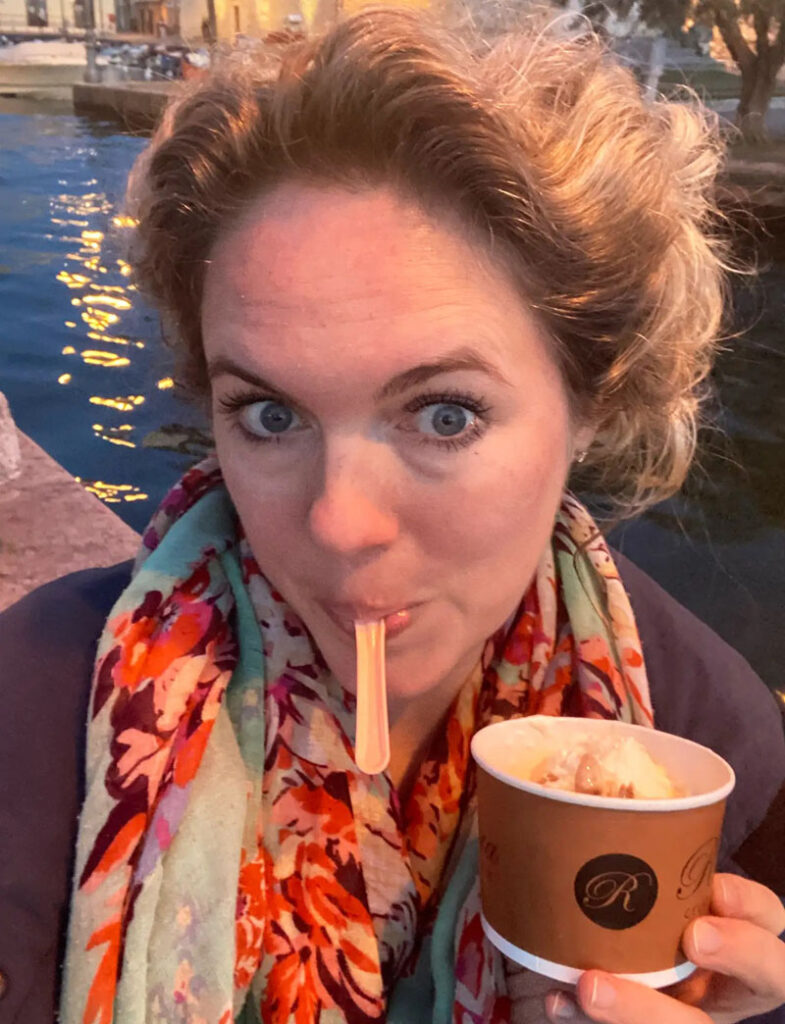
The reason I found the piece interesting is that she makes a great point: Hollywood’s stereotypes of Italian Americans—as either jolly, food-obsessed gluttons or goombah gangsters—has reduced us to one-dimensional cartoons. To butcher Master Shakespeare, “We are such stuff as complexity is made of.”
As Ms. Linden relates, the collective Italian American experience was a mosaic, not a flat pizza pie. Although she ironically, at the end, embraces the la dolce vita stereotype herself, she does expand the topic of “Italian Americana.”
Millions of Italians DID travel west of the Hudson River. They weren’t all from southern Italy. And they experienced the same racism as Italians out east. –BDC
Here is Rachel’s interview from People:
“Did growing up in a big Italian family inspire you to write about food? Do you have a favorite Italian family recipe you can share with listeners?” a radio host asked me in an interview a few years ago.
Caught off guard, I fumbled for an answer before hastily moving on to the next topic. Later though, the conversation niggled at me. I grew up in a large blue collar conservative Italian family in rural Ohio, one that defies every Italian stereotype. There were no big Italian meals during my childhood. At family dinners, it was hearty midwestern farm fare on the table. The closest dish I can remember my grandmother serving was an oddly tasty Midwestern one-pot meal she called Johnny Marzetti – a concoction of cooked macaroni noodles, jarred red spaghetti sauce and melted cheddar cheese that felt far more Midwestern than authentically Italian.
It wasn’t just meals, though. It was everything. There were no first communions or baptisms. The entire family had cut ties with the Catholic Church years ago. No one in our family looks stereotypically Italian either. The men are gruff union steel workers with calloused hands and traditional names like Gino and Adelmo, but since our family hails from Northern Italy, everyone has blue eyes and fair hair. We look more like extras from The Sound of Music than The Godfather. And although my grandfather and his siblings grew up speaking Italian at home, as adults, they chose to only speak English.
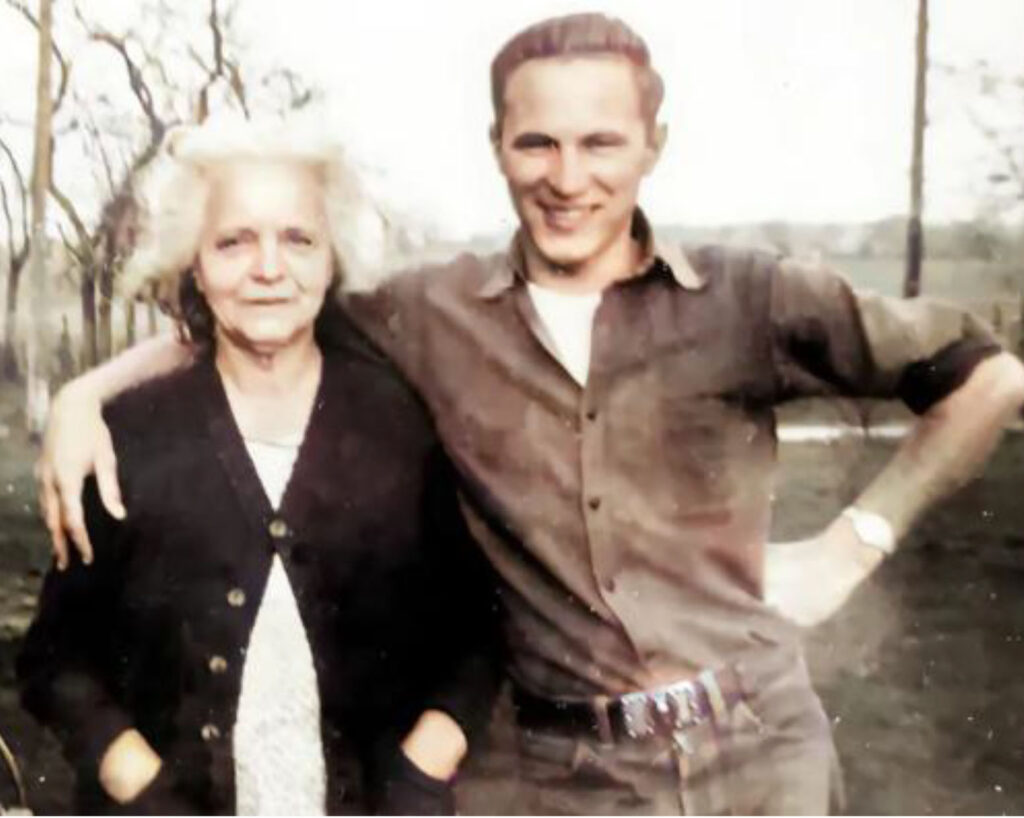
Courtesy of Rachel Linden
The more I thought about it, the more it appeared that our family took no pride in our heritage. In fact, they seemed to want to erase it. I was baffled. Why was my Italian family so very un-Italian? Curious, I did what any good author does. I followed the story.
“Your grandfather never talks about Italy or growing up,” my dad told me when I asked him. “I think it was painful for him.” I pressed other family members for information, gleaning tidbits I hoarded like treasure. Slowly, I began to piece together the story.
The details are scant. My great grandfather Giovanni — a labor organizer who was blacklisted by Mussolini — fled for his life across the ocean to America in the 1920s. My great-grandmother Pia followed later with their two young sons. Upon their arrival to Ellis Island, they were promptly doused in kerosene to delouse them after the voyage. I combed the internet and found their names in a ship’s manifest, another treasure.
Giovanni made bootleg liquor during Prohibition to keep his family fed. They hid the illegal still in the women’s outhouse. There were whispered mentions of prison, alcoholism, domestic abuse. Pia never learned English. Giovanni drank himself into an early grave.
In a rare moment of candor, my grandfather once shared that, as a child, he and one brother slept in an unheated shed at the back of the house, all the family’s clothes piled on top of them to try to keep from freezing to death in the frigid Ohio winters. He told the story with his usual energetic charisma, but I caught a hint of the pain underscoring his words. He managed to escape that hardscrabble upbringing and pull himself up by his bootstraps to build a sprawling real estate business in central Ohio. He exemplified the American dream and seemed to view his Italian heritage as a burden to overcome.
My family’s immigrant experience was a heartbreaking tale of deprivation, racism, grinding poverty and the effects of generational trauma. The stories broke my heart and gave me new empathy. Still, I sensed there had to be more to our history. I wanted to understand not just the hardships of my family’s immigrant experience, but where we came from before. When I learned I had a great-aunt still living near Milan, I booked a ticket to visit, eager to get a fuller picture of my heritage. I was hungry for Italy.
The moment I set foot on Italian soil, I felt an unexpected sense of resonance, a soul-deep contentment. It felt like coming home. Great Aunt Velia plied me with local wine from the Friuli Valley and slowly walked with me through the tiny village where our family is from. I saw the church where my great-grandparents were married, the Catholic orphanage where Giovanni was raised by nuns.
“This is our place, our land,” Velia told me, gripping my hand. I walked my family’s fields and felt my roots sink down deep into the soil. I tasted local dishes, met distant relatives, and experienced the warm hospitality and wry humor of Italian culture. That time in Italy grounded me somehow, steadied me, and made me feel as though I better understood my place in the world and my family’s history. And as I embraced la dolce vita, I started to grasp the paradox that is my family’s story.
We are not all one thing or another. Our story is not all savoring pasta and wine in sun-drenched piazzas. But it’s also far more than the pain of deprivation and hardship as immigrants in a new land. We are all of these things, and each of them has contributed to my heritage and history, to who I am today. I am learning to embrace the whole of it. ****



thank you for sharing the observation…i think most people who read your blog and columns can relate to this observation…..whatever part of Italy one is from…
As to personal features ( my family has a rainbow of looks)….I had an interesting experience during the US/ Iraq war. coming out of a grocery store, this “Caucasian” “lunatico” came up to me and berated me for being an “Iranian” during that war…….I was stunned and tried to think of a response, but by that time he left, with a smirk on his face, I guess telling his friends about his confrontation with an Iranian……Still, it was an education in pure bigotry…..that I never really experienced before….and wont forget either…..PS friends told me its a good thing you kept your mouth shut (unusual for me) you could have been physically assaulted……thinking of the Chinese American who was attacked for being mistaken for Japanese during the Detroit anger over Japanese auto imports.
I guess the point is, these stereotypes are really dangerous, and likewise on a more personal level , even to the point of dropping a vowel at the end of a name….
A very interesting story, thanks for sharing it.