
My colleague Joe Graziose picks up tidbits from the internet that inform me or sometimes annoy me. Yesterday it was the latter, an homage to Arab Sicily, a period that covered 200 years (AD 827 – 1091).
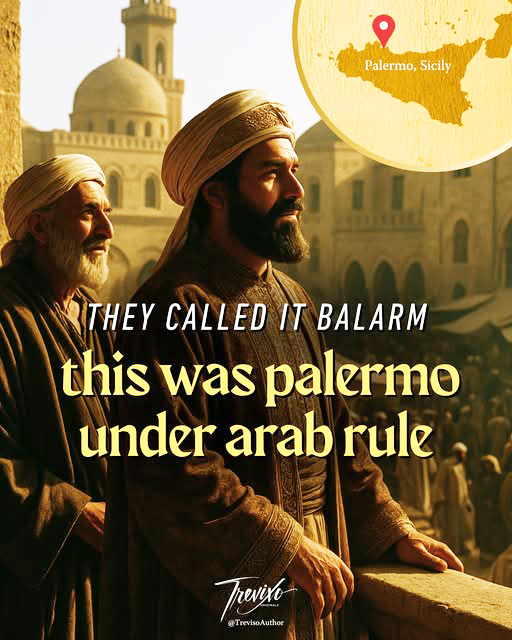
The conquest of Sicily by Muslims was a bloody affair and the so-called 200-year occupation witnessed plenty of Muslim-on-Christian and Sunni-on-Shia violence. But don’t tell this to half-baked historians or Sicilians who revere this “Golden Age,” when the island was a paradise of multi-culturalism and Arab scholarship. It’s the same rosy picture historians paint of Muslim Spain (AD 700 – 1492).
We cannot deny that Europe experienced a “dark age” when Rome fell to barbarians. In contrast, Islam had a very short window of enlightenment during this period. In the Middle East, Arabs had been hobnobbing with pagan Greeks for centuries. They picked up lots of science and technology from Greek books and eventually spread this early renaissance to Spain and Sicily. But by the 1300s, Islamic fanatics replaced science with Allah.
But, let’s suppose Sicily remained Muslim into modern times. Pick a Muslim country today that Sicilians would replicate – Iran? Egypt? Turkey? Libya? You get the point. Yet, some die-hards consider the Arab occupation as near paradise. The Arabs certainly introduced oranges, lemons, eggplant, and rice to Sicily, but every invader brings something, and these crops didn’t have far to travel. Arabs no doubt mingled with the locals but science tells us they are a drop in the DNA bucket compared to the Italic and Greek roots of Sicilians. Still, you’re told to thank the Arabs for cannoli even though you can’t find any in Cairo or Bagdad.
The way this dreamy Islamic history works is by glossing over hard truths like violent religious conversion, Sharia Law, White slavery, punitive taxes on Christians, suppression of women, and other hallmarks of traditional Islam. All Islamic sins are forgiven when historians apply the 200-year “exception” in Sicily.
Ask anyone if ancient Rome was a boon to civilization and they will rattle off negatives like crazy emperors, genocides, feeding Christians to the lions, and crucifixion. Italic Sicily becomes a blur despite three thousand years of attachment to the peninsula, including being named after the Italic tribe of Sicels.
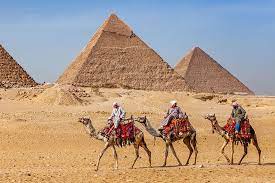
I’ve noticed more sugar-coating of Middle Eastern history in current cable documentaries on ancient Egypt. It used to be that the pyramids were built by slave labor. Now, archeologists inform us that Egyptian peasants happily built them as a way to achieve the afterlife by serving their Pharaoh. Essentially, Egyptian society was one big death cult. But it’s not presented that way to viewers. Imagine an entire civilization predicated on death. Building tombs was a close second to growing food. Mummifying was one of the most secure trades for three millennia. Even generations of Greeks from Alexander the Great to Cleopatra adopted the death cult when they conquered Egypt.
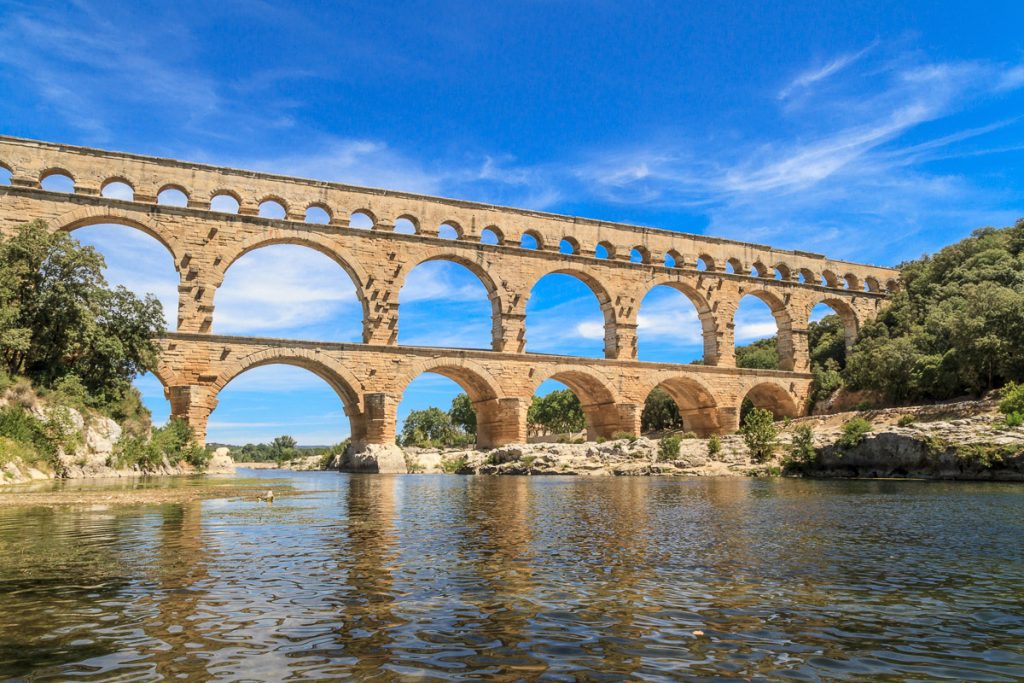
It finally took a cynical Roman, Sextus Julius Frontinus, an aqueduct engineer, to call out the Egyptians. “Our aqueducts serve so many people; who would compare them to the idle Pyramids.”
But Egyptologists live to find another King Tut’s tomb, unspoiled by tomb raiders. None of these scholars that I’ve heard thus far has ever suggested what a waste it was for ancient Egyptian genius and energy to sustain a death cult for so long. Upon reflection, the Islamic obsession with martyrdom and the garden of 40 virgins may have its roots in pharaonic Egypt.
Thankfully, Sicily was liberated from Islam. Leave the Koran; take the cannoli. -JLM



Thank you, John. I’ve tangled with a fellow in the Facebook community. When I first discovered his provocative posts I came off a bit sardonic, consequently he became bellicose and territorial, and he threatened to block me. He seems to have major projects with his version of history. I explained to him I make reports to my Institute about currents trends in Italian depictions. He dismissed me by saying he didn’t give a damn about us. I’ve taken a less provocative stance in my comments and he seems pleased. Yesterday I saw a post on Sant’Agata of Sicily and the lurid allegations of her life. Just this morning he did a post on Hadrian’s wall extolling the Caledonians and other tribes of Scotland who would never bow to Roman rule. This was my comment. Got a “like” but he might not…to wit…It is noteworthy that the Wall is located near the Scotland border and Rome left an indelible mark on England including founding an important little hamlet called Londinium, not to mention the baths of Bath….and they weren’t that enamored with cold weather and the challenges..So there we are, with a lot more challenges than David “Chase”
In many ways the Mediterranean world was and still is a cauldron, and the ingredients very combative….and after the fall of Roman pluralism….rampant monotheism was the rule of the day and intolerance was the king….Whether it was Christian, Jewish or Muslim……it always is predicated upon one way to believe…the rest are considered heretics. I never thought those good old days were very tolerant, and those times as now, are very much a consequence of the rebirth not of knowledge (Renaissance) but a rebirth of religious fanaticism…
In addition, those quaint mountain top villages throughout Italy, were in fact fortifications, and inland to protect themselves against slave raid from the so called tolerant Muslims! Was not a good idea to live along the Italian coast in those days…..
I am not going to mention the opera, because if i do some politically correct idiot will try to drum it out of the standard repertoire..but, if it was translated from Italian, it talks about the muslim slave raids and how people felt about them!!! As it is now they just enjoy the music.. (my blood pressure went up a degree when the Gilbert and Sullivan Opera the Mikado was taken out of the repertoire because of a couple of jokes against the emperor)–and nothing new even today…..and will just leave it at that, less u are threatened with a loss of citizenship…….i.
It is about time that we realize that everything we read is not true. We must double check what we read.
Take the time to research. There is a agenda on too many in the academic world and in the media. Demand that you are able to think and draw your own conclusion. I don’t need others to think or know what I should believe.
There is a belief among many historians that Islam is a religion that favors conversion by the sword, although some say otherwise. Apparently the Koran has conflicting statements, some favoring and some opposing forced conversions. Thus, I think it fair to ask Muslim advocates with which view they agree.
Also, we should keep in mind that not all Arabs are Muslims. Although most are, some are Christians or other faiths.