
Today is celebrated as Little Easter in Italy, a recovery from yesterday’s religious blow-out.
For those of you who think that Catholicism saved the ancient Italic people from their pagan ways, think again. It’s a question of theory vs practice. Peter and Paul supplied the mysticism, but Rome created the structure. On almost every count our version of Christianity is a far cry from its Jewish roots.
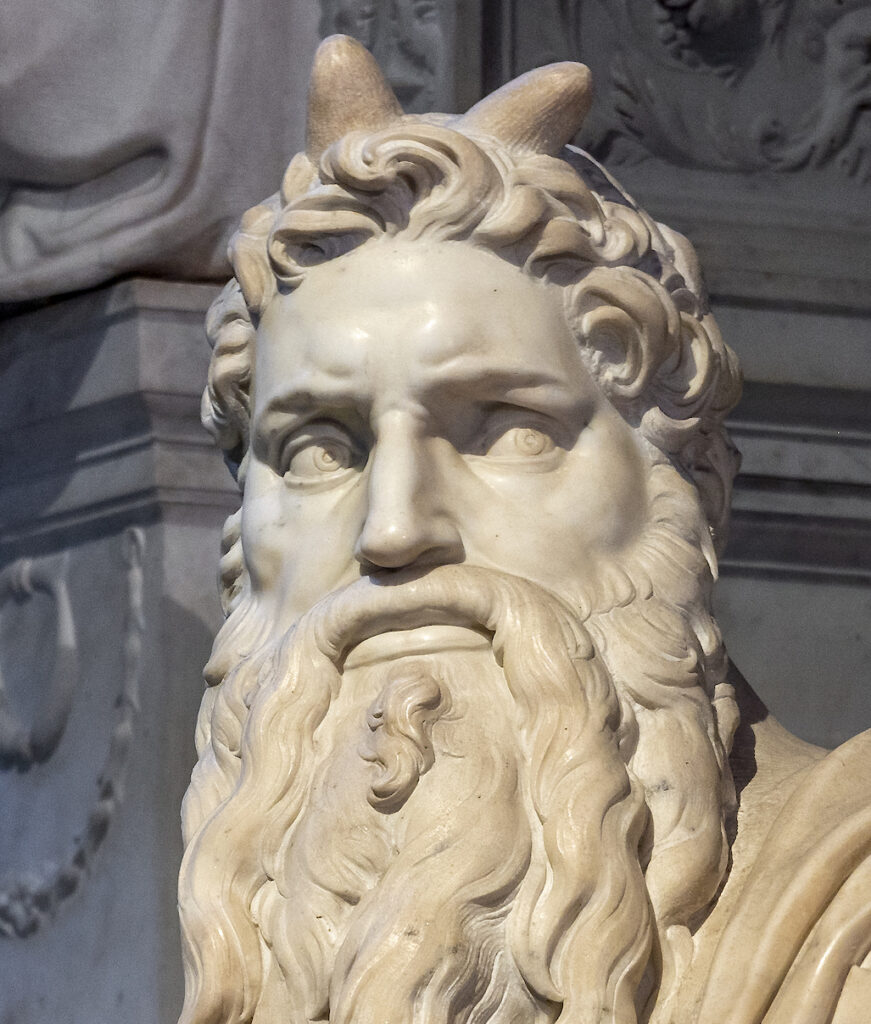
to a mistranslation of the Bible
You can rattle off the easy stuff like a Pope, nuns, saints, street processions, and graven images; all of which had their Roman origins: Pontifex Maximus, Vestal Virgins, and a pantheon of gods and goddesses. Even the Greek Orthodox gave up statuary, which Italians turned into an entire category of art. We also opted for a pagan solar timetable leaving Jews, Muslims and Asians to follow the erratic moon.
Our pagan ways didn’t include a heaven or hell. Death was pretty much the end of things, although honoring dead ancestors hedged our bets. So, selling pagans on an afterlife found ready buyers. Hell was another story. The old gods didn’t expect us to turn the other cheek or lead a goodly life because the consequences were limited to Earth. Eternal damnation was a new and frightening concept especially when the average lifespan was only 40 or 50. Often, it closed the deal for conversion.
The old gods were far from the paragons of virtue like Joseph, Mary, and John (the Baptist). In fact, the gods were as corrupt as their earthbound worshippers. Gods formed alliances with each other, screwed around with the mortals below and sometimes mated with them. Convincing pagan Romans that Jesus was the son of God was blasphemy to Jews but not to our ancestors. Julius Caesar claimed his distant ancestor was Venus. Emperors themselves entered the pantheon as “divine” or god-like. Many a temple was built to Caesar Augustus.
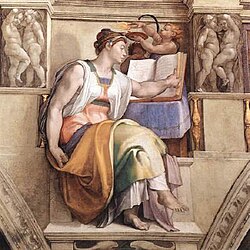
of the Sybilline Books
Many Protestants sects are appalled by our Catholic elevation of saints, a practice dating to the Roman concept of patron/client—don’t bother the Big Guy, he has agents and go-fors to handle the load. (This applied to Jupiter, the chief god, his standard abbreviation was IOM—Iupiter Optimus Maximus, the best and greatest.) So, we used to wear St. Christopher medals, still pray to St. Jude or the Holy Mother, and may bury a statuette of St Joseph in the yard to sell a house. These are all vestiges of our pagan roots.
The ancient Italic people were superstitious not religious. Worshipping the gods meant keeping them on your side. Morality was instead taught through family values and civic laws. Pagans observed many of the Ten Commands before Moses – honor the gods and your parents, do not kill or steal. They believed in public works, feeding the poor, protecting orphans, freeing slaves and allowing them social and economic progress. They exceeded the Jews in the education and socialization of women as well as allowing divorce. And, of course, stoning adulterous wives was not a Roman penalty.
Our pagan ancestors had the equivalent of baptism in Praenomio, bestowing the first name on newborn males. When the boy reached puberty his rite of passage (“Confirmation”) was the Liberalia, a civic ceremony allowing him to vote. Their bible was the Sybilline Books, kept in Rome’s Temple to Jupiter. Purchased by an Etruscan king from the Greek colony at Cumae (near Naples), the writings were Nostradamus-like (i.e., vague) predictions, that often guided Roman decisions for war and peace. Pagans had their version of a pilgrimage to Lourdes or Fatima. They journeyed to the Greek city of Delphi where the Oracle resided or to Egypt, home of the healing goddess Isis.
It may be an inconvenient truth to say that our pagan side wasn’t totally lost. –JLM



Well this by far was the most entertaining, frequently side splitting, and informative blog for me in the history of this organization. I especially enjoyed the unabashed syntax of “hedged our bets”, “ready buyers”, “don’t bother the Big Guy” and the double entendre cornuto Moses. I hope this is not to declasse for our group but the minute I started reading I heard my childhood record of Pat Cooper’s upside down St. Anthony statue. “He don’t answer my novena , he stays that way”. As far as an “inconvenient truth to say our pagan side wasn’t totally lost”, I have to say by my standards it was a “convenient truth”. All of it was a very colorful part of my childhood including St. Lucy’s eyeballs on a plate.
The author and professor Camille Paglia has publicly commented that she’s not convinced at all that the Italians have ever discarded their pagan roots, a notion she celebrates.
This was, I believe, a source of friction between Irish and Italian immigrants, too. The Irish disdain for Italians was two-fold: 1) they berated Italians for berating the pope during re-unification (1871 is when the Vatican finally caved in); and 2) they then berated southern Italian immigrants for their “overly emotional” approach to religion and worship.
Ever see the “Running Madonna” in Sulmona, Abruzzo? IIA member Frank DiPiero introduced me to this ritual. Every Easter, a Madonna statue, dressed in black mourning robes, is solemnly carried to the piazza on the shoulders of worshippers. When she “sees” a statue of Christ on the cross on the church door, her carriers suddenly sprint toward the statue and her black robes fly off, representing the joy at seeing her resurrected son.
The ritual is centuries old and pagan as heck. Yet it’s also artistic and very moving. Bravi!
https://youtu.be/dxkUnPBYxgY
And Roman Senators became Bishops and Cardinals.
Sometimes I do wonder about all the miracles attributed to Saints, can they all be false?
Visiting Delphi was a special experience for me…..the spiritual energy still emits and not hard at all to follow the transition from so called pagan spirituality to today’s Christianity. There is a certain sense of interconnectedness to all these comment and bottom line is the universes somehow has a way of incorporating many contradictions. And even before the Romans were the Etruscans , of which I am eagerly looking forward to checking out at special exhibit in San Francisco in a couple of months….I use to adhere to a sense of evolution of thought and spirituality,,,,however the more I witness today’s world , and the illusions of AI, I frankly just accept the contradictions as they are…perhaps Roman pragmatism would also handle all this without much to do …….