
The Wall Street Journal had an article on “The Distortion of American Studies,” a report on how academia accentuates the negative in American history. They referred to issues of American Quarterly magazine published by Johns Hopkins University, considered the “premier journal of American studies.”
The authors were astonished that during the past three years the magazine never wrote about the many positive achievements of Americans: their ingenuity, how they have garnered 42% of Nobel Prizes, how they put the first man on the moon, vanquished Nazi Germany, or won the Cold War. Instead, the magazine provides readers with a litany of our moral failures like slavery and mistreatment of Indigenous peoples, but nothing of our virtues. True, but how many people even read the American Quarterly? Those that do, no doubt, are well-educated and already know our national virtues.
The same is true of most minority groups that are continuously praised for their various virtues and skills despite revelations to the contrary. Be it their ethnicity, gender, sexual bent, religion, or even immigration status, everyone seems to fit under the umbrella of positivity except the affable Italian American.
We are relegated to the shallow end of the diversity pool. No one seems interested in how we managed to excel in every field of endeavor—from science to sports, from corporate bosses to bricklayers, academia to engineering, music to agriculture. Our traditional values hold dear manual labor as well as education. Name another ethnic group that has as much diverse talent yet settles for a popular image as crooks, cooks, or clowns?
A quick search of Artificial Intelligence finds these contrary facts on Italian Americans:
- The community has struggled for decades to distance itself from persistent Mafia and organized crime tropes perpetuated by media.
- By 1979, the median family income for Americans of purely Italian ancestry out-earned almost all other ethnic groups except Scots and Germans. Today, their median income remains significantly higher than the national average.
How do we explain to our own children and grandchildren the reality of their heritage? That we pioneered nuclear fission (Enrico Fermi) not organized crime. That we produced Lee Iacocca (Chrysler) not airheads like Joey Tribbiani (Friends). That we created Bank of America (A.P. Giannini) not just pepperoni pizza. That we fielded 26 Medal of Honor winners not a fictitious Michael Corleone in a Marine uniform. That they should be prouder of Caesar Rodney (signer of the Declaration of Independence) than My Cousin Vinny.
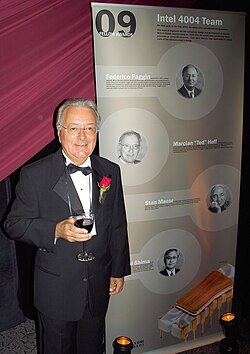
Here’s a man most Italian Americans don’t know about, a key architect of Silicon Valley. Federico Faggin is Italian-educated but at 88-years-old an all-American. I know nothing about computer history but Faggin “…is best known for designing the first commercial microprocessor, the Intel 4004…and the development of silicon-gate technology (SGT),” which made the old transistor technology obsolete, according to Wikipedia. To confirm this assessment, he was awarded National Medal of Technology and Innovation for 2009, the highest honor the United States confers for achievements related to technological progress.
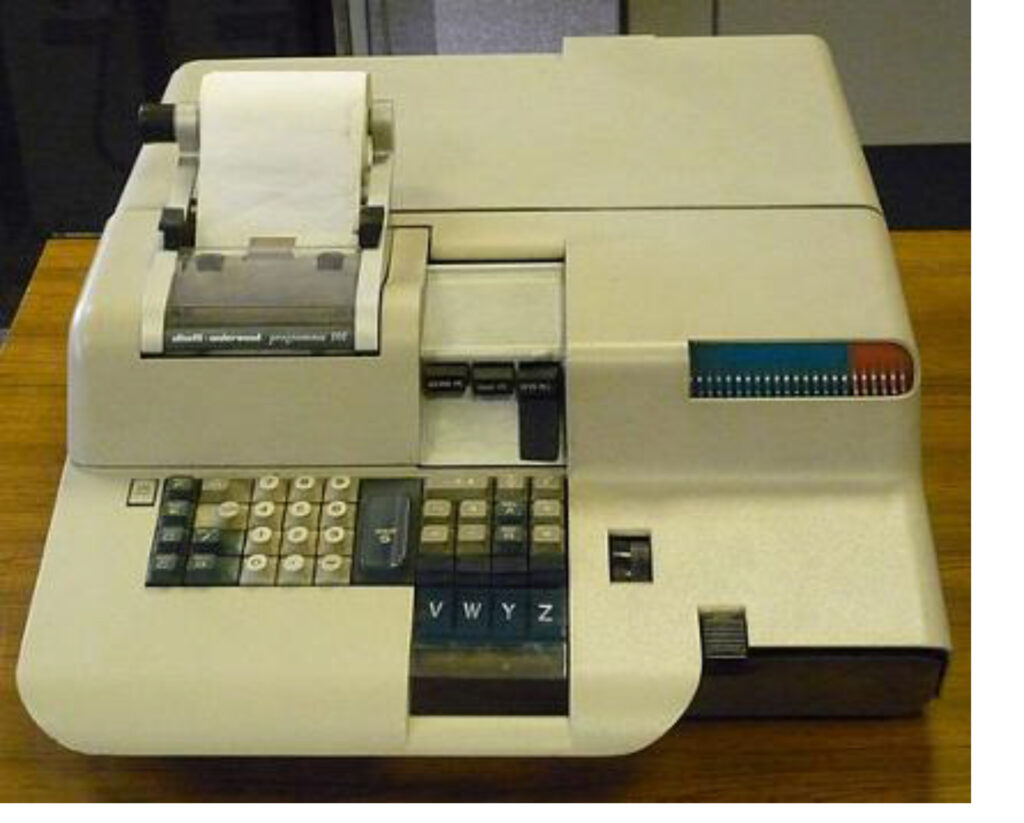
As a youth, Faggin (born in Vicenza, Veneto Region) worked for Olivetti where the first desktop computer was invented, the Olivetti Programma 101, in 1964 (a decade before Apple!). The team that invented it had to label it a “calculator” to keep it from General Electric which had just bought the electronics division of Olivetti. The Programma was portable, affordable, and an easy-to-use machine (costing around $3,200) that brought computing power to individual users. So revolutionary that it was unveiled at the 1964 New York World’s Fair. Over 44,000 units were sold and used by NASA for Apollo 11 mission calculations.
But how can such a man and these facts compete against Tony Manero (Saturday Night Fever) or Tony Soprano in the minds of many? Most people can’t handle the depth of the Italian legacy, especially when the popular consensus favors stereotypes.
All we can do is share these tidbits of heritage and savor the good feeling. –JLM

Thank you for continuing to share such great and typically unknown information but unfortunately our own people are more interested and proud of the fictional character Tony Soprano than Federico Faggin, a real impressive successful Italian.
Well framed….and it’s not for trying. The only silver lining is we just do our own thing…and succeed beyond expectations. Also, it just underscores why this forum and similar, are so important in order to have a reality check and “documentation bank” to know and understand the Italian American experience in the USA. I was recently hosting an Italian composer in the SF Bay Area….and he was really not aware of the contributions of the culture to the Bay Area, with an interactive history going back to the 1850’s, so this knowledge gap is really a two-way street.