
Tuesday will be the 2,779th birthday of Rome. But only a few Italic Institute members will be celebrating. The day will be acknowledged in Rome and probably in most Latin language classes around the USA. But it’s a pity that Italian Americans have no historical or traditional memory of April 21st, about its meaning or import on their lives.
Do we know of any other famous city in the world that celebrates its founding day? Jerusalem? Beijing? London? Paris? Athens? New York? They are lucky to estimate what year or century they were founded. Yet, since before the time of Christ, the ancient Italic people chose April 21st as the beginning of their glorious past. And that past led directly to what we now call Western Civilization.
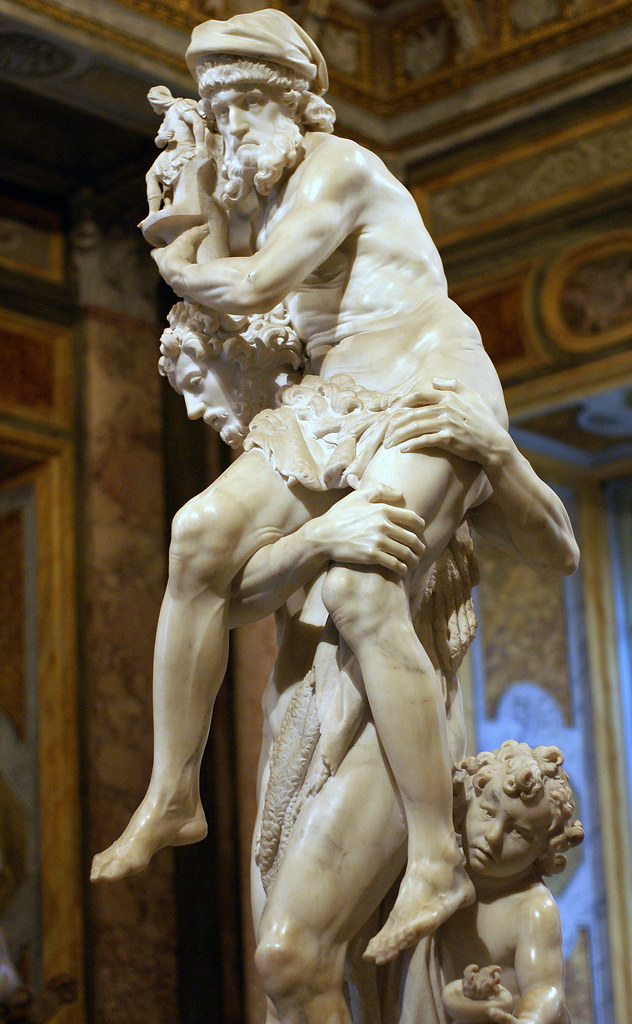
Imagine the world without Rome and Classical Italy. The Greeks would have blended into an Asiatic mass or succumbed to barbarian hordes. Christianity would have remained a Semitic sect. Forget all the Western developments in government, law, science, engineering, art, and music. Europe would have been divided between conquering Turk and Arab Muslims. The New World could have been discovered and settled by the Chinese.
The City on the Seven Hills has been vilified and romanticized but its legendary founding is so unique that it bears retelling.
It begins with the Trojan Horse, that Greek deception that sealed the fate of Troy. So embedded in later Roman consciousness that an ancient poet coined the phrase that we still repeat, “Beware of Greeks bearing gifts.” From burning Troy, a prince named Aeneas escapes with his son and father. Sailing to Africa, Aeneas seduces Queen Dido of Carthage but soon abandons her (with a straight face!) claiming the gods are driving his destiny: “Italiam non sponte sequor” (“Not of my own free will do I seek Italy.”)
Upon reaching Italy, Aeneas finds the Latin people of Latium (Lazio), one tribe of the many Italic people populating central and southern Italy even into Sicily (the Siculs). After a time, the descendants of Aeneas, the twins Romulus and Remus, are born. They are either orphaned or abandoned then found by a she-wolf and suckled perhaps for a few days until taken in by humans.
As the twins grow, Romulus decides to build a separate family settlement along the Tiber River. While delineating the property line with a stone wall, his brother Remus mocks the low wall which angers Romulus. A fight ensues and Remus is killed. Romulus names his settlement Roma. The year is 753 B.C.
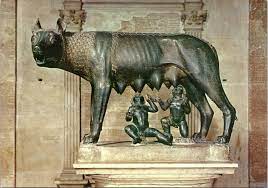
Like Columbus Day, the Birth of Rome (Natale di Roma) is not a national holiday in Italy. Both remain urban celebrations. However, during the Fascist era April 21st was a national holiday as Mussolini wanted to Romanize Italians to create a “warlike” people embarking on a new empire.
In 1945, with the defeat of Fascism, April 21st was intentionally replaced with April 25th as Festa della Liberazione. But will such a holiday last the test of time? Our own Independence Day celebrates the birth of a new nation in 1776, not ridding the country of British and Hessian troops in 1783. Italy already has a holiday to celebrate its Republic Day on June 2nd.
Italy has an abundance of Catholic national holidays and just added St Francis Day on October 4th. Centuries ago, the ancient Feast of Augustus (Ferragosto, August 15th) was Christianized to Assumption Day. Would it be “fascistic” for the Italian nation to celebrate the Discovery of the New World by an Italic navigator and also the founding of the city that made Western Civilization possible? –JLM
Key 2026 Public Holidays in Italy
January 1 – New Year’s Day (Capodanno)
January 6 – Epiphany (Epifania)
April 5 – Easter Sunday (Pasqua)
April 6 – Easter Monday (Pasquetta)
April 25 – Liberation Day (Festa della Liberazione)
May 1 – Labor Day (Festa del Lavoro)
June 2 – Republic Day (Festa della Repubblica)
August 15 – Ferragosto & Assumption Day (Assunzione)
October 4 – St. Francis of Assisi Day
November 1 – All Saints’ Day (Ognissanti)
December 8 – Immaculate Conception (Immacolata Concezione)
December 25 – Christmas Day (Natale)
December 26 – St. Stephen’s Day (Santo Stefano)



and before the Romans were a quite amazing civilization that blended with the Romans, the Etruscans…of which, there will be a special show in San Francisco, at the Legion of Honor….about the time of the Magna Grecia era……only embellishing our amazing heritage…I am eagerly looking forward to checking it all out…
Mr. Mancini, your column is, as always, wonderfully informative. They instill pride. God bless.