
In my last blog, “Here’s to the Ladies,” I wrote about Italian American female singers from Chicago, past and present. Since then, I came across a 1979 article by Jack Newfield (1938-2004), the legendary reporter who covered stories in the Village Voice, the New York Daily News, and the New York Post.
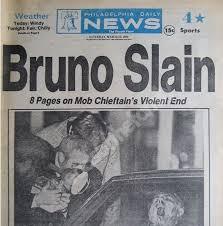
Newfield also had a hand in making film and TV documentaries and won an American Book Award in 2003 for The Full Rudy: The Man, the Myth, the Mania, a critical take on “America’s Mayor,” Rudy Giuliani. In short, quite a Renaissance man—Newfield, that is, not the since-disgraced Giuliani.
(Institute members may recall that, back in the day, we also took offense at some of Giuliani’s less-than-dignified traits, such as dressing in drag, his public Vito Corleone impressions, and happily hosting “Mob Movie Week” on cable TV channels.)
In 1979, Newfield wrote a piece called “The Myth of Godfather Journalism,” a must-read for all Italian Americans. It’s a reminder, which we sadly need in today’s world of “instant news” and “misinformation,” that nothing can take the place of good, old-fashioned journalism. In other words, a passion for facts.
Nearly 50 years old, Newfield’s article is significant in that it carefully peels away the mafia mania which developed—and has since become institutionalized—in the American media after the release of Francis Ford Coppola’s 1972 magnum poopus, The Godfather.
First, Newfield notes the obvious: “The public’s impression—and much of the media’s knowledge—about the mafia owes a large debt to the imagery of Hollywood. Most people think gangster’s act like George Raft, Edward G. Robinson, Humphrey Bogart, John Garfield, Richard Widmark, Al Pacino and Marlon Brando…The power of film fantasy is so great that when Joey Gallo was growing up in Brooklyn, he went to see Richard Widmark play Tommy Udo in “Kiss of Death” a dozen times. Gallo, then an aspiring thug, began to imitate Widmark’s posture, body language, slang, and style of dress.”
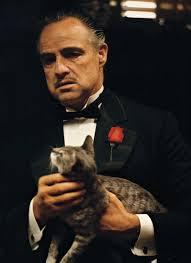
Interestingly, decades later, Sammy “the Bull” Gravano, considered John Gotti’s right-hand man, walked out after a screening of The Godfather and inadvertently let the gatto (cat) out of the bag regarding the film’s ultimate, lasting damage: “Maybe it was fiction but for me, that was our life,” said the prolific hit man and felon. Gravano then went on to clarify: “Not just the mobsters and killing and all that (s**t) but that wedding at the beginning, the music and the dancing, it was us–the Italian people!”
In sum, Newfield’s observation on the power of movies to overpower rational thought remains compelling. Everyone has swallowed the myth that Italian culture is at heart a criminal culture—from the hoi polloi, who enjoy every “new” mob movie (though they’re all rehashed) to the intelligentsia, who dote over the literary references in The Sopranos (while ignoring their own condescension toward the crude, anti-Italic characters in the show).
Secondly, and even more importantly, Newfield reminds readers what today’s audiences seem to forget: mobsters are mobsters, period. The way the American media has turned Italian gangsters into the equivalent of charming con men (as with Sylvester Stallone in the current Tulsa King) betrays their ultimate reality: “They are not immigrant populists, or outlaw philosophers with benevolent dignity, or tragic half-ethical super-dons who draw a fine moral distinction at pushing white powder. Most mobsters would rather stick an icepick in your ear rather than work.”
And, like a true journalist, he lays out examples: “Joey Gallo used to beat up his wife. Lucky Luciano was a pimp. Carmine Galante’s wealth came from importing, distributing, and selling heroin that went into the veins of ghetto schoolchildren.”
Yet such real-life people, thanks to endless media repetition, retain the whiff of being heroic anti-heroes. Instead of being considered reprehensible, which is what they were, they are seen as “representative” of Italian Americans and their culture, then and now.
There have been other heroic journalists in the past calling out this deeply entrenched media bias.
There was Harry Golden Jr, who in 1957, a decade before Mario Puzo wrote his pernicious potboiler novel, noted that “the Italian American is seen as the stereotype of the gangster. This is both unfair and untrue.”
There was Chicago columnist Mike Royko, who in a 1987 column called “The Godfather Syndrome,” noted how the obsession with mob movies infected politics by soiling the reputation of leaders like Mario Cuomo.
There was Tom McNamee of the Chicago Sun-Times, who in 2006, after a Batavia, IL middle school put on a show with young performers called “Fugeddabouit: A Mobster Comedy,” pointed out that “middle school is where kids are supposed to learn about what’s great about America, about the contributions and achievements of every race and ethnic group…Listen to me, young children of Rotolo Middle School. The adults in your school are wrong.” (November 13th, “Enrico Fermi Has a Splitting Headache.”)
There was Maureen O’Donnell, also of the Sun-Times, who wrote in 2007 that “since ‘The Sopranos’ began airing, it seems to me that some people feel it’s given them a license to slur Italian Americans” (“The Sour Note in The Sopranos, June 5th).
Alas, such courageous freedom of speech is rare. Even worse: When occasionally allowed to surface, such opinions are shouted down as being silly or oversensitive—often by Italian Americans themselves!
But it’s wise to recall Newfield’s ultimate point that “mafia” guys are career criminals—no more, no less.
As he puts it in the last line of his article: “The rest is hype, the rest is myth.” –BDC



I am still waiting for the day when Hollywood and all make documentaries and real-life tales about the courageous Italians and Italian Americans who struggled against organized crime. They are the real heros..
Somehow the “Robin Hood” archetype has leaped over into an American image of the mafia, and all its strange aberrations….At the same time, some of the earlier oppressed Italian immigrants during 19th century and their kin, tended to identify with the power that was associated with organized crime and, bottom line (some compensation), we are still stuck with this pernicious weed image.
One would think this gets old after a while….so it’s doubly ironic when I see Italian Americans spout the same anti-immigrant stereotypes that were perpetrated against them and their ancestors…….So in conclusion, the pecking order is alive and well….
Believe it or not, such films were made. Two come to mind: The Black Hand (1951) and Pay or Die (1960). In both, local thugs were seen as a menace by the local Italian immigrants. No one admired them or thought they were cool. They wanted them gone.
The warm glow of the Corleone family in The Godfather changed all that. Non-Italians, in droves, identified with the closeness of that family, something missing in their own lives.
By the time of The Sopranos, the image of the Italian gangster was turned into a cartoon, removed from all reality. Tony Soprano may have strangled a guy during a college campus visit with his daughter but viewers didn’t see this as appalling. Very sad.
Sadly, Godfather Journalism has created “Godfather history”.
I took a guided tour of NYC a few weeks ago. The tour guide was Hispanic. When in the Bronx, he covered the decades when the area experienced tremendous decay and violence (70s and 80s). He mentioned the presence of gangs and “mafias”.
He said that the reason why there were so many gangs in the Bronx was because the mafia had shown how to corrupt cops and engage in criminal activities. In other words, he was suggesting that “it is was the Italians, not other minorities”.
It is another absurdity that goes along with the idea that Italians brought crime for the first time in the American cities like NYC or Chicago. This blog has covered this lie in the past.
Do you remember the name of the tour company? I grew up in the Bronx and witnessed the decline. To imply gangs were “taught” by Italians to commit criminal acts is an outright lie.
Yes, I remember the company: Royal City Tours.
I had the same experience many years ago during a tour of Boston. The young fellow driving the tour bus had a set spiel when taking us thru the Italian North End. “This is the Italian section where crime is low but well organized.” As I left the bus at the end of the tour I spoke to the driver and urged him to drop the spiel as it was insulting to me and Italian Americans. Don’t know if he reported my suggestion to the tour operators.
In Chicago, we still have “Gangster Tours,” which take tourists past spots where thugs either lived or were rubbed out. This Disneyfication of It Am criminals (but no one else’s) is the very definition of racism–the blithe belief that criminality is part of the Italian DNA, to be celebrated or enjoyed. Yet from a safe historical distance, natch.
A bus tour of where current gangbangers live would result in immediate danger, as a bus load of American tourists found out a few years ago while riding through Ecuador. Gangsters started firing at their windows, and the bus had to speed away.
Similarly, up until a few years ago–when Outfit guys were still alive–local reporters would confront them on the street, egging them on. Yet the wiseguys either ignored the reporters or engaged them in harmless small talk. Try doing that with a drug cartel boss, Asian or Russian mobster, or an Islamic terrorist with a bomb on his hip.
The hypocrisy, not to mention the false mythology, surrounding It Am crooks, is sad.
A while ago, I submitted a request to the film industry to begin research and production for a full lenght film about Giuseppe Garibaldi, the Italian Patriot and unifier of italy. No response, crickets!!
The film industry and our Italian people are and will continue to be known for the Gangster portrayal, food (so called italian food but Americanized) and the buffoon.
Until we realize that we are more than that, we will continue to drift and drift away from our fatherland and its greatness in the world and eventaully the Italan American and its current culture will be homogenized into the American soul!
Wake up Italian America!!