
The founding mission of the Italic Institute in 1987 was to restore a classical perspective to the Italian heritage. To that end we used Italic in our corporate documents. Italic was directly from the Latin Italicus, the name of an inhabitant of ancient Italy. In the 1980s, in fact, I frequented a restaurant in Manhattan called Foro Italico (the Italic Forum). It was named after the ruins of an ancient forum in Rome.
Unfortunately, 99.9% of Italian Americans didn’t quite understand that Italic is synonymous with Italian in the same way that Gaelic or Celtic refers to Irish people, or Gallic, Judaic, Slavic, Germanic, Hispanic, or Arabic have their ethnic links. Added to the confusion italic generally refers to a type script. Nevertheless, explaining “Italic” would be part of our educating mission on the road to restoring the classical heritage.
What is a classical heritage? Simply, any ethnic group that achieved a high degree of civilization in ancient times has classical roots. Greek-, Jewish-, Chinese-, and Indian-Americans are prime examples of classical people. Anglos, Irish, Germans, Blacks, Russians, Poles, etc didn’t flower until the Medieval or modern eras.
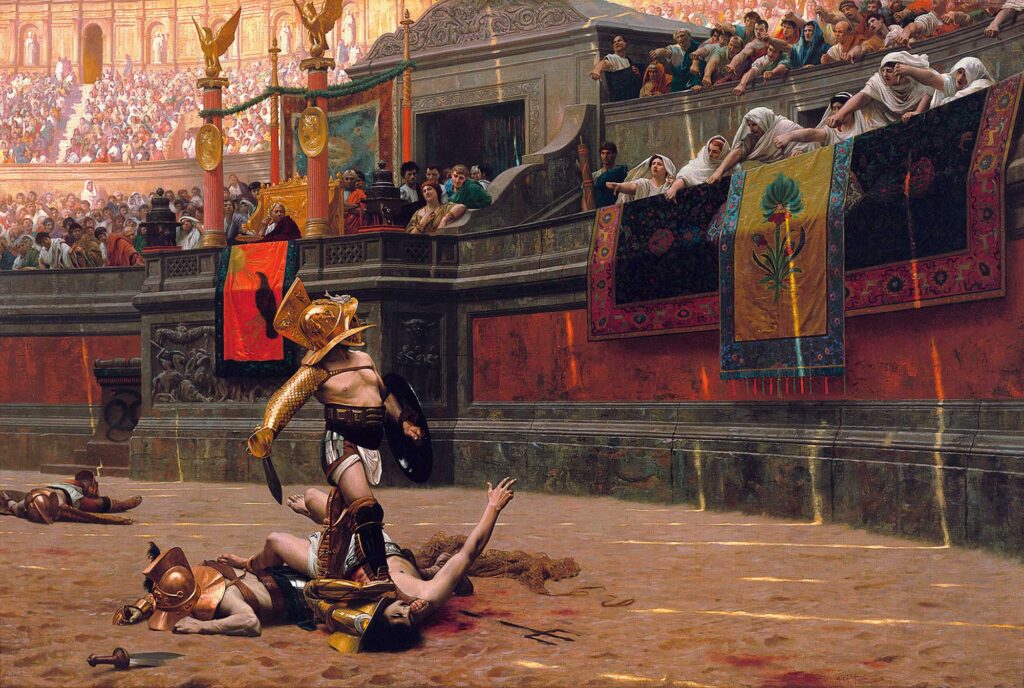
For reasons not readily apparent to most Italian Americans we got our classical stuffing knocked out of us after the fall of the Roman Empire. While other classical people preserved their ancient legacy and passed it on to succeeding generations, Italian Americans were raised believing that their heritage was born on the ashes of Rome. Consequently, they believed that they invented themselves; that their ancestors were actually Roman slaves who mixed with Vandals, Huns, Goths Greeks, Arabs, and Normans. The Catholic Church reenforced the belief that our ancestors were fed to Roman lions when in reality our ancestors were more likely to be cheering in the bleachers.
A whole mindset took control of our outlook. We were really artists and anarchists, craftsmen and laborers, cooks and crooks. We came to these shores thankful that we were taken in, without an inkling of how these shores and this civilization were made possible by our forebears. Our classical past was less important to us than the shovel they gave us to dig the subways. We took the abuse, the defamation, and the inferior status. We worked our way up, educated our children, and achieved leadership roles in government and industry. We thought we had the last laugh.
Any other people who achieved this remarkable success would exude dignity and inculcate in their children a sense of their past. Not us. Culturally, we are no deeper than whatever remaining regional roots we have. Making matters worse, Hollywood informs America daily of our criminal bent in the endless movies and TV series created to entertain the masses at our expense. Even our Church has made sure that our Roman past stays buried. It will not acknowledge that Rome gave it all the riches and power that it has via Emperors Constantine, Theodosius, and Justinian. The Church tells us August 15th is The Feast of the Assumption, when Mary ascended to heaven. In Italy, this religious day marks the beginning of Ferragosto, a national vacation period. In truth, it was a Roman holiday called the Feast of [Emperor] Augustus‒that fact is still embedded in the name. No matter. Many of us have no genetic memory of a classical past, and little interest in studying it.
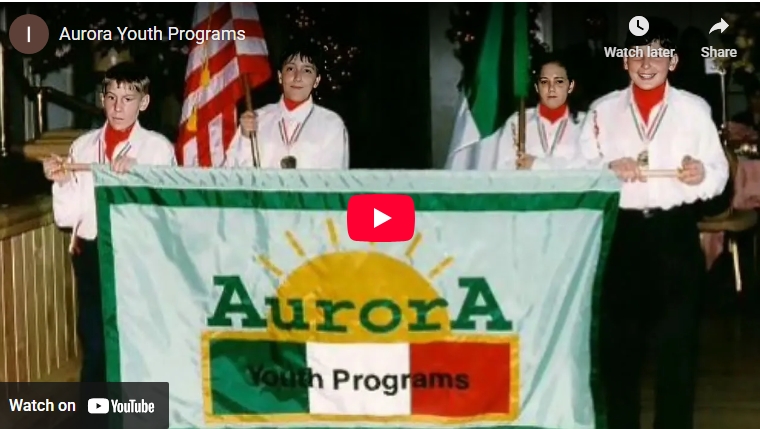
Still, our Institute persists in its Italic ways. We have just produced a video about our quest to impart the classical heritage to pre-teens via the Aurora Youth Program (1987 – 2007). It is quite inspiring and can be viewed on our homepage (italic.org) by clicking the “Galleria Italica” icon.
There is hope, yet! ‒JLM



John, I recently viewed the video at your prompting. Very heartwarming on so many levels. I was particularly moved that I saw Asian and Black children taking an enthusiastic role in the heritage and language. All of this is so needed today in our fractured world.
In my opinion, in order to keep an educated and vibrant ethnic group alive, we NEED an Aurora Youth Program for the youth and a type of “Explore Italy” program for the 18 – 25 year olds. These are the best ways to make an ethnic impact for the future.
The problem with such a program as Aurora today is that kids are totally distracted by other Saturday activities, especially the boys. You end up with only girls and other ethnics.
The Greeks Jews, Koreans et all tie the ethnic acculturation of their children to their proprietary religions. We do not have that mandatory angle.