
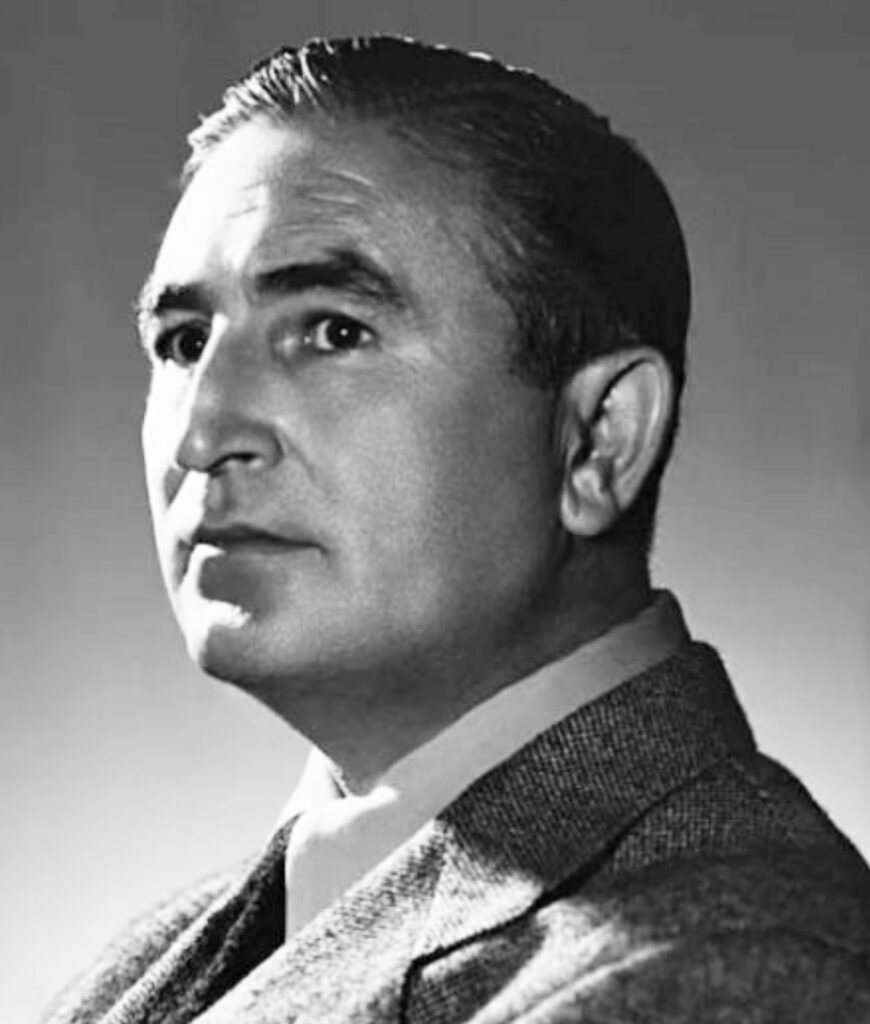
He had more songs on radio’s Your Hit Parade than Irving Berlin (42 vs. 33). During his long career he wrote 500 songs, scored 300 movies, and even scored 100 of the animated Looney Tunes we watched as kids.
He won three Oscars for music at the Academy Awards and worked for all four major Hollywood studios with a variety of compositions that surpassed Cole Porter, Rogers & Hammerstein, and Irving Berlin. His name was Harry Warren but he was born Salvatore Guaragna of Brooklyn.
I thought about Harry Warren while attending yet another Broadway show based on the works of Barry Manilow, Neil Diamond, the Four Seasons, and other contributors to America’s musical anthology. Harry Warren was not of our generation and his only melody familiar to us is That’s Amore, an Italian American standard made famous by Dean Martin. Yet, some enterprising Broadway investors might do well with staging the life of Warren through his hit songs of the 1930s, 40s, and 50s. Broadway actually adopted Warren’s Hollywood’s 1933 master work 42nd Street to the stage in 1980 with a run of 3,000 performances. Warren melodies included the title song Forty-Second Street, We’re in the Money, and Lullaby of Broadway.
His other hits from the 1930s went on to go pop in later decades: There Will Never Be Another You (Chris Montez 1966), and I Only Have Eyes for You (by the Flamingos 1959).
In 1941, Warren penned Chattanooga Choo-Choo which the Glenn Miller Orchestra made famous. Warren’s 1942 melody At Last was later recorded successfully in 1960 by Etta James. In 1943, Warren wrote the love song You’ll Never Know, a staple of the war that separated lovers and still strikes a nostalgic chord today. In 1945, he wrote On the Atchison, Topeka and the Santa Fe, sung by Judy Garland in the movie The Harvey Girls.
This amazing composer was the first to write music for films, a task fellow Italian American Henry Mancini later pursued in the Pink Panther series and Breakfast at Tiffany’s, just to name a few. Critics called Harry Warren the “invisible man of Hollywood music.” Among Italian Americans, Harry Warren is not at all well known as there is greater identification with the music from The Godfather and the Rocky series. It is a sad commentary in light of Warren’s contributions to American culture. Hence the need for some kind of new recognition of the man.
Although born Salvatore Guaragna, one of 11 children to Italian immigrants, his father changed the family name to Warren when Salvatore was still a child. Like many Italian immigrants, a name change was often spurred on by discrimination. I was shocked to learn that one of my maternal great-grandfathers was listed on the 1930 Census as Williams when his real surname was Guglielmo (actually “William” in Italian). It appeared to be a one-shot change, perhaps to assimilate better, but he was buried as a Guglielmo.
But Harry Warren never reverted to Guaragna. He was focused on a musical career, first learning to play his father’s accordion, then teaching himself the piano. Although Warren was never great on the piano, all he needed it for was to peck out new melodies. In that pursuit, he was a master of melodies. (Anyone who listens to what passes for music today knows that writing melodies is a lost art. Rhythm is king nowadays, more African than Western. And Hip-Hop? Even worse. If you can’t hum it, it ain’t music!)
He went west in 1929 when Hollywood was still mostly vacant land. He missed the urban life but his first triumph with scoring 42nd Street was a homage to his eastern roots. He didn’t always fit in with the Hollywood crowd; he was too down-to-earth. He married in 1917 and stayed that way for 64 years until he died in 1981 at age 87.
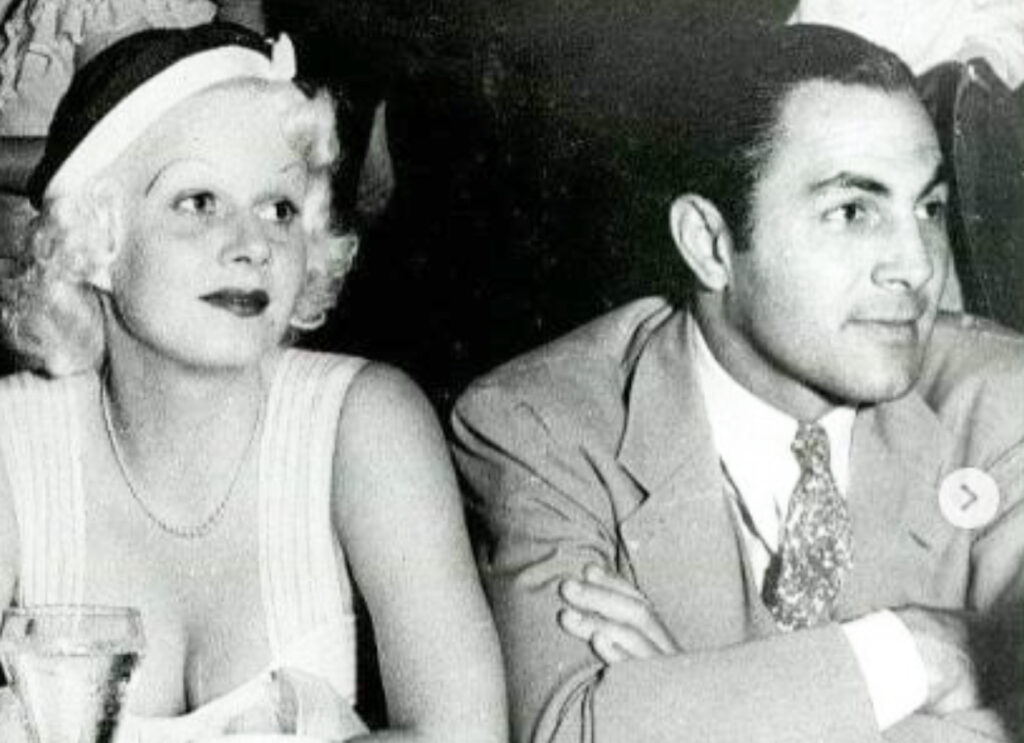
An interesting post script concerns Warren’s longtime agent, Vic Orsatti. A fellow Italian American, Orsatti had a reputation for honesty and great negotiating skills. Beside Warren, his other clients included Judy Garland, Betty Grable, Frank Capra, and Edward G. Robinson. It was Orsatti who got Judy Garland the role in The Wizard of Oz.
The story of Hollywood isn’t always a Jewish one. –JLM

John, I agree that Harry wrote beautiful music and it’s the young Americans and Italian Americans who have missed something wonderful.
I grew up with all of Harry’s music….yes, I’m a senior Senior Citizen. I never played an instrument, but I looked into the mirror and sang Harry’s songs. It was great!
John, that is great information and his story is such a successful one, it’s a shame he isn’t more well known especially amongst Italian Americans.
Italian name and last names are still perceived as too ethnic even today. Halsey and Lady Gaga would have had their fame hampered if they had used their real last name (Frangipane and Germanotta). Even Leonardo Di Caprio recently mentioned that his agent recommended that he changed his Italian name to “Lenny Williams” because “they will never hired you”.
For gangster movies, it is the other way around. They look for the “most Italian” actors and actresses.