
America is gearing up to host the World Cup of Soccer next month. Not exactly a sport that gets Americans excited, although an American team will be showing its stuff. Besides, hyphenated Americans can cheer on their ancestral homelands.
Alas, Italy will not be playing in the 2026 World Cup. The four-time champions (1934, 1938, 1982, 2006) failed to qualify after losing to Bosnia and Herzegovina in a penalty shootout during the European finals last year. To be sure, Italians are in a funk over this and fired national team coach Luciano Spalletti. Less than two years on the job, he had replaced coach Roberto Mancini who abruptly resigned over a staffing issue in 2023 after winning Euro 2020. Seems that solid leadership is wanting on and off the field.
Some Trump administration officials suggested that Italy can be squeezed into the competition if the Iranian team is excluded—Iran had won in the Asian play-offs before the current war. Happily, Italian sports officials declined the suggestion as undeserved and certainly not honorable. So, our community will be denied cheering rights and the euphoria of a possible Italian victory. Those of us who remember the elation at Italy’s 1982 and 2006 wins know how uplifting and unifying they were.
common sense.
I often lament how time has eroded Italic pride. There was a time when each day lifted our moods on news from the world of sports, music, movies, television, and sometimes politics. Italian Americans were on a roll. Our celebrity heroes were like most of us, all-Italian, born of immigrant parents or grandparents. Relatives with heavy accents were the norm growing up and whatever fun we had with them was chastened by the respect for their success against all odds.
We may complain about the new generations not having the pride we have, but they live in a different world. Few have four Italian grandparents or even hear an Italian accent at family gatherings. They have no Rocky Marcianos, Joe DiMaggios, Don Ameches, Perry Comos, Dean Martins, or Geraldine Ferraros to connect with. They don’t have a media of the 1950s and early 60s that imported Italian films and hit songs and made rom-coms that introduced us to world-class stars like Rossano Brazzi, Gina Lollobrigida, Marcello Mastroianni, and Sophia Loren. Can you name any Italian American sports or music figures or Hollywood stars today who proclaim their roots or represent their heritage honorably?
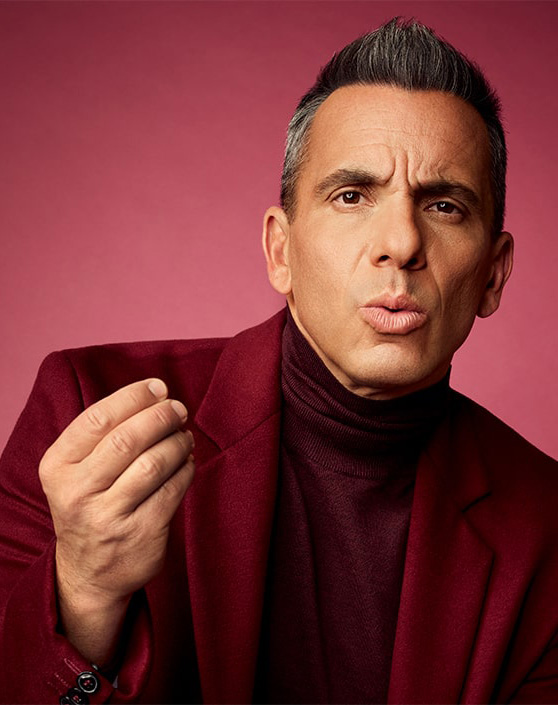
Our Gen X*, Millennial, and Gen Z descendants may only derive their italianità from food and celebrities such as Sebastian Maniscalco, a Gen X stand-up comic. His routines are laced with enduring Italian attitudes. He mocks social “norms,” over-thinking, and wasteful habits; often mimicking for laughs his Sicilian father’s brusque style. Italian parents, as we know, didn’t hesitate to “tell it like it is,” without sugar coating. If you spent too much money on something, if you overcooked the macaroni, if you followed the crowd instead of tradition, you heard about it.
*Generation X (Gen X): 1965 – 1980 / Millennials (Gen Y): 1981 – 1996 /
Generation Z (Gen Z): 1997 – 2012
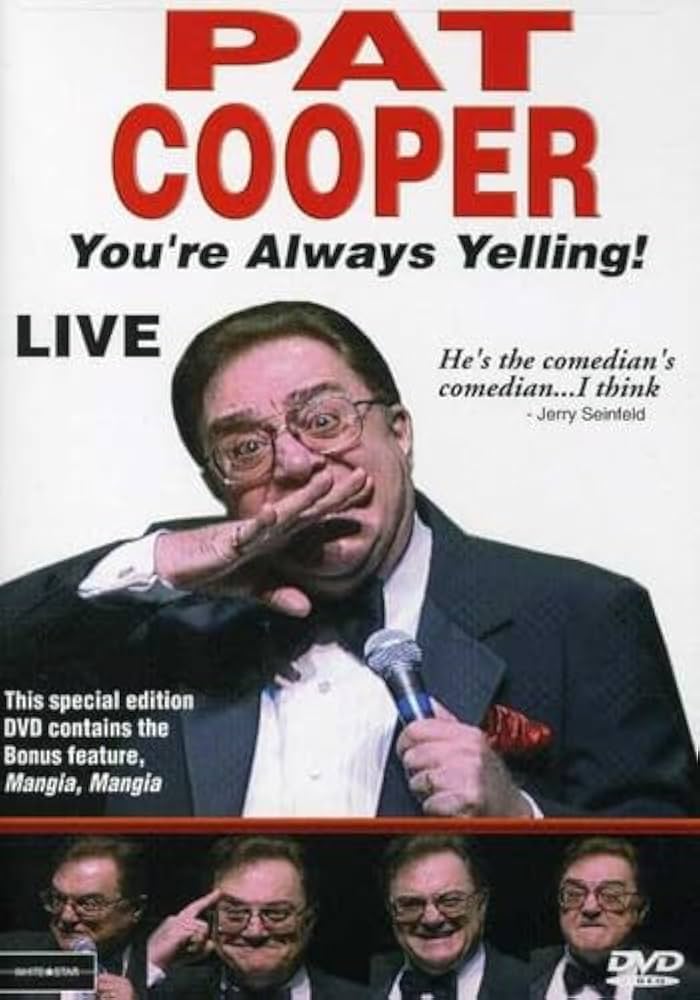
Our Maniscalco was comedian Pat Cooper (Pasquale Caputo) who also used his father to show us the flaws in American customs. When Pat wanted to buy a car, his father explained how the NY subway system was better: “they open the doors for you, you sit down, they take you where you want, then open the doors when you leave.” To explain multi-culturalism, his father invited the Chinese neighbors to dinner and “put a note in the ravioli” to make them feel at home.
Italian humor hasn’t changed in 3,000 years, always based on common sense. The Roman putdown of the scientific Greeks was, “they can tell you the distance from the Earth to the moon but not how many miles to Athens.” Sounds like a Maniscalco or Cooper, right?
Maybe we can pass on our sense of humor while everything else fades away. That, and a note in the ravioli may be our only options. –JLM
 John Mancini
Love your notes. Pat Cooper was my man, and the pacesetter
Back in the days of yore Pat Cooper seemed funny. Not now. His humor is mocking southern Italian culture and insulting the cultures of others. Maniscalco is even worse. For great Italian-American comedy you have to go back pre-Cooper. I’m thinking Jimmy Durante, Jerry Colona and Lou Costello. As for the present the best we’ve got is Ray Romano, and he’s just OK.
I forgot to mention the Italian-Americans of the past who provided humor in song. The list would include Nicola Paone, Louis Prima, Lou Monte, and The Gaylords (Ronald L. Fredianelli, Bonaldo “Burt” Bonaldi and Don Rea). They have no contemporary equals.
You hit the nail right on the head. Yesterday is GONE! Italian Americans, as they want to be called (most of them) have no idea of what we came from.
They cordon themselves off to be Italian American but it is the wrong Italian American species. They are connected to the “Yo”, “Ha ya doin”, “guido”, “mafia type” and all of the other ilk that perpetrates them.
Over the years, I have tired of their antics to bring their Italianess to other Italians.
I hate to say it, but are true Italian culture is gone, except for the few of us who still relish those days.
Interesting, but you see now many third or fourth generation Italian Americans that want to connect to their past. As I see it, if our first generations were not so inculcated to learn English and still spoke the language at home and in the streets, as many other immigrants do today, then we would not have this problem.
Anyway, I am rambling, but the Italian Americans today cannot match what Italian Americans of yester year have. further, Italians of Italy do not connect with their counter parts here as must look at them with disdain.
We are the melting pot and as we continue to melt down, we will be a figment of the imagination in the years to come. I can see it all around me.
I had an afterthought on this subject as well.
Go to many Italian American events today, especially weddings and Italian Social gatherings.
What do you hear? Not the Italian music of yester year, but sounds of today, All American, hip hop, rap and other kinds of music and they call these Italian events. they are not. Our third and fourth generations are gone to America and there is no coming back.