
Though writer F. Scott Fitzgerald’s famous phrase “There are no second acts in American lives” has long been disproven (think of Clint Eastwood winning his second-Best Director Oscar in his 70s after winning one ten years earlier in his 60s), Americans do tend to accept it. The standard arc in our society is fairly straightforward: school, work/career, and then retirement, the latter hopefully a contented one, free of financial or familial worries.
And although many Americans still only associate Italians or Italian Americans with food, it’s not a completely unfounded belief. Just as African Americans are a deeply musical people, Italians/Italian Americans do have an innate talent for foodstuffs—a talent just as profound as music.
(Nota bene: A pretty good case could be made that Italians are also a deeply musical people, from Guido D’Arezzo forming the Western musical scale in A.D. 1025 or 1026 do/re/me/fa/sol/la/ti/do—to the Italian mastery of numerous musical genres across the centuries: classical, opera, folk, pop, and jazz.)
The media’s fixation on food tends to obscure another great trait of the Italic people: an amazing work ethic. Not the obsessive, burnt-out kind, like those in America and Japan, but one which miraculously combines the intensity of work with an appreciation of knowing when to relax and recharge.
I can’t think of a better local (Chicago) person who exhibits both the Italic mastery of food with a deeply inspiring work ethic than Agostino Fiasche, a man who dispels the notion that there are no second acts in American lives.
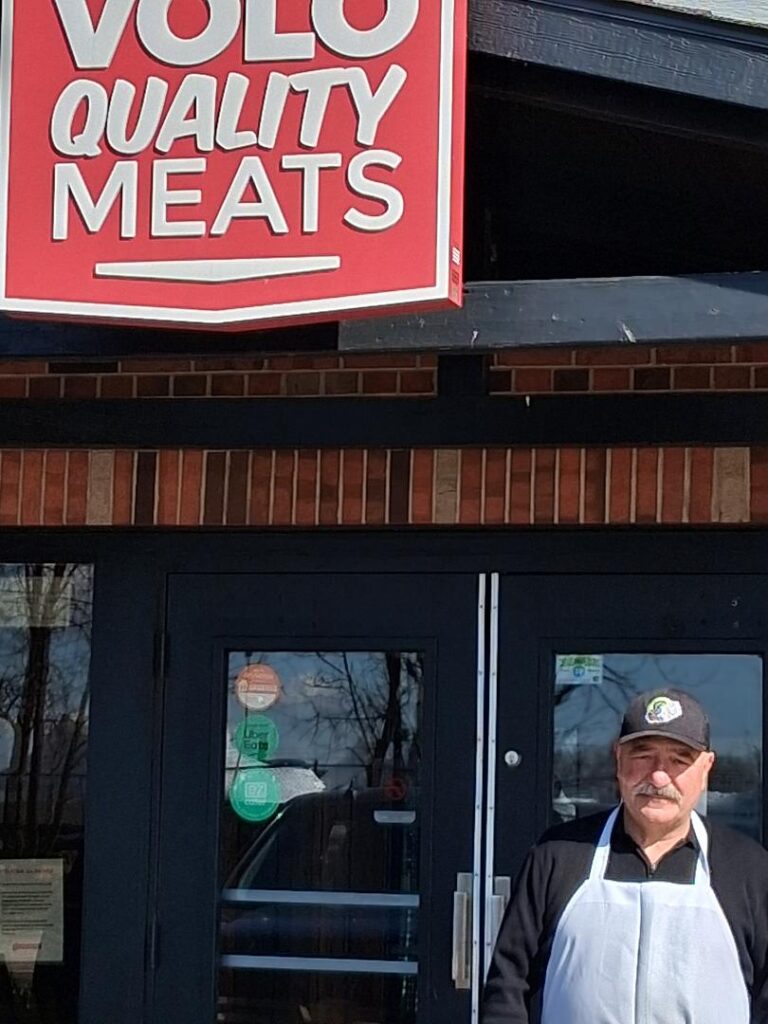
I first profiled Signor Fiasche over 20 years ago, when I worked as a reporter for Fra Noi newspaper in Illinois. It was a great honor as his Ristorante Agostino in Chicago was one of the best eateries in the city. Remember the old advice that if you want to know which restaurant serves great Italian food, you should watch where the Italians go and eat? Agostino’s was located on the bordering suburb of Elmwood Park, home to a large number of Italian Americans. And where did they go and eat? Straight to Agostino’s. The word soon spread and everyone in the city started going. Andiamo!
What made the restaurant so special is that the Calabrian-born Fiasche (town of Coccorino, near the famously beautiful coastal town of Tropea) handmade his pasta and also shopped for the freshest daily seafood. Working with his wife Anna Longobardi, a native of Naples, they opened Agostino’s in 1985 and turned north Harlem Avenue in Chicago into a little piece of Italian culinary heaven. And it was all due to innate talent.
“I didn’t learn how to cook on YouTube back then,” Agostino jokes.
I keep using the past tense because, alas, all good things must come to an end. After surviving both COVID (2020) and then a kitchen electrical fire (2021), Agostino decided that 38 years in the restaurant business was enough. He closed the restaurant in 2023, saying it was time to retire. Yet not only did Agostino not retire. He had both a second and a third act! As he told me recently me, “What was I supposed to do, just sit home and watch TV?” This is what I mean by an amazing work ethic, something for which Italians/Italian American rarely get credited. Let us consider what followed his Act I.
Act II.
Agostino was the driving force in popularizing ‘Nduja (En-DOO-yah), the popular Calabrian sausage spread, both in Chicago and then nationally. The seeds started at the restaurant a decade ago when a local patron, returning from a trip to California, shared some ‘Nduja with Agostino. He was not impressed: “I took one bite of it and actually got offended. This was not the ‘Nduja I grew up with. It was an insult to my heritage.”
Rather than let it go, Agostino and his son Antonio began making their own, eventually opening up a small processing facility. Spreading (no pun intended) the word amongst patrons and then on social media, they created the ‘Nduja Artisans company. Their brand of ‘Nduja became a sensation. And yes, it is the real thing: Agostino still visits his 92-year-old father, a former butcher, in Calabria, maintaining the Italy-American food connection.
“Look at this,” Agostino says, showing me a picture on his cell phone of an ‘Nduja salame in Calabria hanging from a ceiling. “It looks like a torpedo!”
While most potential retirees begin thinking of Florida, Agostino was churning out ‘Nduja, ensuring the reputational quality of Italian food.
Act III
An old German meat warehouse was up for sale in Volo, IL, a small village (population: 6122) about 52 miles outside of Chicago. It’s part of an area known as the Chain O’ Lakes, a waterway system in northwest Illinois known for fishing, boating, and small family beaches. Very rural.
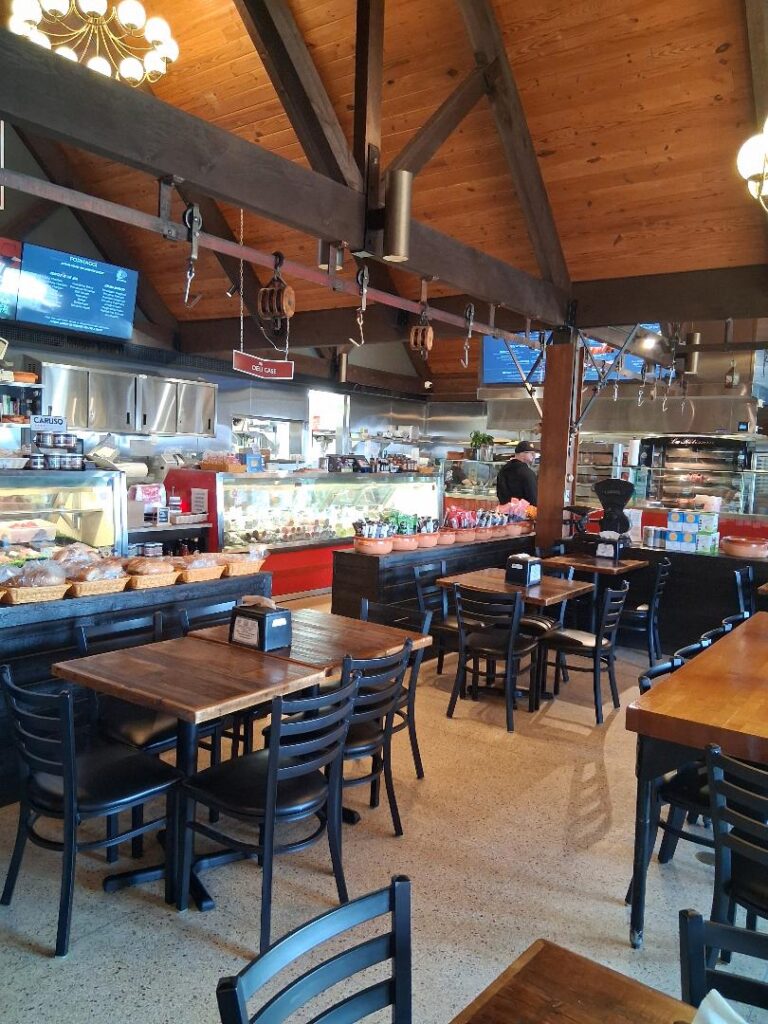
Though its main attraction is the Volo Museum, a combination classic-cars-and-dinosaur-park, Volo now has another one: Volo Quality Meats, opened in 2023. Agostino transformed the warehouse into a first-class Italian deli, bringing quality Italian food to a part of Illinois dominated by fast food chains.
Again: How many retirees do you know spend three days a week supervising an Italian deli out in the sticks? And Volo Quality Meats remains a family-run business: In addition to his wife, who also comes in a few days a week to cook, Agostino’s brother-in-law Mario is there, working behind the counter.
And the Fiasche culinary empire continues with his son Antonio, who in 2018 opened up his own Italian market in Chicago called Tempesta. This was soon followed by Peanut Park Trattoria in 2021, located in Chicago’s historic Little Italy area of Taylor Street.
Says Agostino: “You hear a lot of people criticize America, for whatever reason, but I’m telling you, look at me. I’m proof that you can still come here with a dream and make it come true. Just focus on quality and treat people right.”
As for treating people right: You can see this when Agostino walks throughout the deli, greeting lunchtime customers. And you see it again when he walks to the unattached production facility next to the deli building, interacting with his manual workers as they themselves are sitting down for lunch.
“We did some renovations and added some new machines but this warehouse was still in pretty good shape. We added new refrigeration. As for the deli, we expanded the area and added some personal touches, like those pictures of Italy. The woodwork on the ceiling is still original.”
Also on the wall is a picture of Volo Quality Meats, encased in a rainbow. Agostino smiles.
“That’s nice, isn’t it? Someone took that picture after a rain and gave it to me.”
I can’t think of a better visual tribute to Agostino Fiasche, a man whose talents are as awe-inspiring as the colors of a rainbow.
For more information on Volo Quality Meats, Tempesta Food Market, and Peanut Park Trattoria, here are links below. -BDC



Recent Comments